Get a FREE Case Evaluation
"*" indicates required fields

Sportsbook Betting Apps
- Apps Implicated in Lawsuits: DraftKings, FanDuel, Caesars, BetMGM, ESPN Bet
- Apps Used For: Online sports gambling and betting
- Product type: Mobile app
- Potential Injuries and Losses: Financial losses, gambling addiction, depression, anxiety, PTSD, physical side effects of stress
- Lawsuit Type: Class action, personal injury, potential MDL
- Lawsuit Status: In progress
Sports Betting App Addiction Lawsuit [March 2026 Update]
People are filing lawsuits against online sportsbooks like DraftKings, BetMGM, and FanDuel, alleging the companies deliberately target people with problematic gambling. Other allegations include that sportsbook apps encourage addictive behavior and pressure people to place bets through misleading promotions and aggressive advertising.
People harmed by sports betting apps like DraftKings, FanDuel, and BetMGM are filing lawsuits alleging predatory design, misleading promotions, and failure to protect vulnerable users. This page explains current cases, eligibility, and legal options.
Tactics used by SportsBook apps are alleged to have encouraged people to bet more money and bet more frequently than they otherwise would have. People are working with lawyers to draft complaints against sports betting apps. People who lost large sums of money, gambling while under 21, or who suffered mental health injuries may be able to file a sports betting addiction lawsuit to pursue compensation.
If you are experiencing a crisis related to betting on sports apps, you can call the National Problem Gambling Helpline at 1-800-522-4700, send a text message to 800GAM, or use the website chat feature. If you or a loved one is having thoughts of suicide or self-harm, call, text, or chat 988 for 24/7 immediate assistance from the Suicide and Crisis Lifeline.
Sports Betting Addiction Lawsuit Timeline & News – March 2026
January 2026: Michigan man sues DraftKings over alleged failure to follow 24-hour cooling-off period
Michael Koester, a Michigan resident, has accused DraftKings of ignoring a state-mandated 24-hour cooling-off period and immediately raising his wager limits. The suit alleges DraftKings violated the laws of multiple states. Ultimately, Koester says he lost more than $25,000 as a result.
October 2025: Pew Research finds 43% of Americans say sports betting is bad for society, 1 in 10 have used a sports betting app
A 2025 Pew Research agency report on American attitudes toward sports betting found that 43% believe sports betting is bad for society, while only 7% hold a positive view of its influence. The report also found that 10% of Americans had placed a bet with a sports betting app, while 22% had placed a bet either with a family or friends (15%), in an app (10%), or in person at a casino or other venue (8%). Compared to 2022, more Americans believe sports betting is harmful, and usage of sports betting apps has increased from 6 to 10%.
May 2025: Baltimore files suit against DraftKings and FanDuel, seeks penalties and injunctive relief
The city of Baltimore filed suit against DraftKings and Flutter Entertainment, FanDuel’s parent company, alleging the use of deceptive advertising along with algorithmic targeting of problem gamblers. This suit is ongoing. Along with monetary damages, it is seeking injunctive relief to force the companies to stop targeting known problem gamblers, update its marketing practices, and modify its app design.
March 2021: DraftKings settles class-action suit related to advertising claims
A lawsuit against DraftKings was settled, with DraftKings paying out $8 million to eligible recipients in a pool of more than 3 million users. This lawsuit was related to advertising and DraftKings’ daily fantasy sports contests, not gambling addiction.
May 2018: Supreme Court decision allows individual states to legalize sports betting
In May of 2018, the U.S. Supreme Court struck down the Professional and Amateur Sports Protection Act, a 1992 federal law outlawing gambling on sports in the Murphy decision (16-476 Murphy v. National Collegiate Athletic Assn.). This decision cleared the way for individual states to set their own rules on sports betting. Companies like DraftKings and FanDuel, which already operated popular daily fantasy sports apps that some lawsuits allege constituted gambling, quickly began operating online casinos and sports betting apps.
On this page:
Sports Betting Addiction Lawsuit Timeline & News – March 2026
What is the Sports Betting Addiction Lawsuit About?
Why Are People Filing Sports Betting Addiction Lawsuits?
Examples of Lawsuits Filed Against Online Sportsbook Apps
Who Are the Defendants in Sport Betting Addiction Lawsuits?
Allegations Against Sports Gambling App Companies
What Stage are the Sports Betting Addiction Lawsuits In?
What Are Sports Betting Apps and How Do They Work?
Gambling Addiction and Injuries Linked to Sports Betting Apps
Important Studies About Gambling Addiction
What Damages Can People Sue Sports Betting App Manufacturers For?
Who Qualifies to File a Sports Betting Addiction Lawsuit?
8 Steps to File a Sports Betting Addiction Lawsuit
What is the Deadline for Filing a Sports Betting Addiction Lawsuit?
Sports Betting Addiction Lawsuit Settlements and Awards
Learn More About Sports Betting Addiction Lawsuits From Our Legal Team
What is the Sports Betting Addiction Lawsuit About?
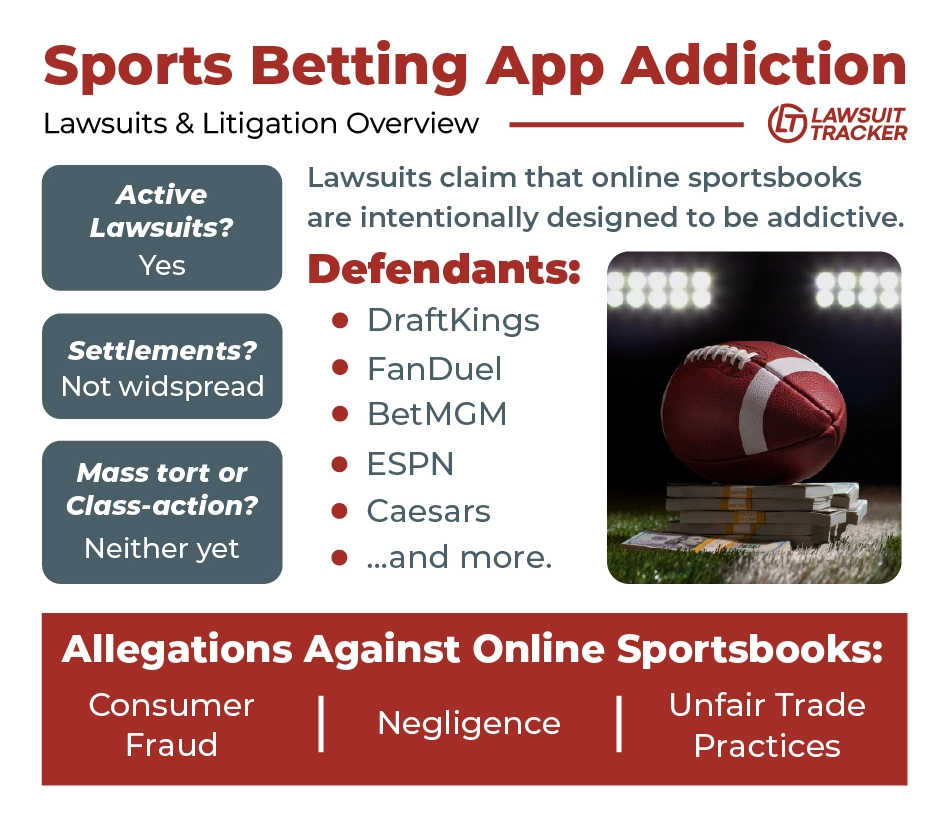
People are suing DraftKings, FanDuel, BetMGM, Caesars Sportsbook, and other online sports betting companies, claiming the apps encouraged gambling addiction and targeted young people and problem gamblers. Plaintiffs have suffered significant financial losses and physical, psychological, and social side effects related to gambling disorder and addiction. The lawsuits accuse the sportsbook apps of deliberately encouraging addictive behavior and ignoring clear, sometimes explicit, signs of addiction.
| Sports Betting Addiction Lawsuit Information | |
| Main Injuries: | Financial losses, gambling disorder/addiction, PTSD, anxiety, emotional distress |
| Defendants: | DraftKings, FanDuel, Flutter Entertainment, Caesars, BetMGM, ESPN, and various state gambling affiliates |
| Mass Tort or Class Action? | Previous class action lawsuits have been filed, but attorneys are exploring a future MDL. |
| Active Lawsuit? | Yes |
| Common Allegations | Predatory bonuses, VIP targeting, ignoring exclusion lists, misleading ads |
| Legal Basis | Negligence, consumer fraud, unfair trade practices |
Why Are People Filing Sports Betting Addiction Lawsuits?
People are filing sports betting addiction lawsuits because they believe that Sportsbook Apps used tactics that were predatory or negligent. Plaintiffs in sports betting lawsuits say that gambling apps used promotions, bonuses, repeated notifications, VIP programs, and other tactics that encouraged excessive betting and addictive behaviors. People are filing personal injury lawsuits in hopes of recovering some of their gambling losses.
Additionally, a series of class-action lawsuits against companies, like DraftKings and FanDuel, allege that the companies deliberately target and exploit problem gamblers, actively encourage addictive gambling behavior, and lure new players to the platforms via misleading advertising designed to downplay players’ risk of losing money. Several lawsuits also accuse the companies of violating state laws designed to protect problem gamblers and, in one suit, of cancelling and refusing to pay out lucrative winning bets.
Plaintiffs in sports betting lawsuits report developing gambling addictions, leading to significant financial losses, with some individual plaintiffs losing hundreds of thousands of dollars. As a result of addiction and financial losses, they also report experiencing physical symptoms of extreme stress, including anxiety, PTSD, and insomnia.
Since the U.S. Supreme Court effectively legalized sports betting in 2018, rates of gambling addiction in the US have risen, with indications that men in their late teens and early 20s are especially vulnerable. In addition to the physical symptoms alleged by the lawsuit plaintiffs, gambling addiction has been linked to suicidal ideation and domestic abuse.
Examples of Lawsuits Filed Against Online Sportsbook Apps
Different types of legal actions have been filed against online sports gambling sites. Below are some examples of different types of lawsuits filed against sportsbook betting apps.
City of Baltimore vs Sportsbook Apps
Case name: City of Baltimore, ex rel. Ebony Thompson, plaintiff v. Draftkings Inc., a Nevada corporation, and Flutter Entertainment PLC d/b/a FanDuel Inc., an Irish corporation, defendants
The City of Baltimore filed a lawsuit against DraftKings and FanDuel, alleging that the sportsbooks used deceptive advertising to lure in new users, then attempted to hook them on gambling. The suit alleges that the sportsbook companies deliberately targeted problematic gamblers algorithmically with the goal of extracting as much value as possible.
This suit is notable because it was filed by a public entity. It is not a mass tort or class-action suit, and it isn’t seeking damages. However, the outcome could have broad implications for the sports betting industry. In addition to statutory penalties, the city of Baltimore seeks to prevent both companies from targeting disordered gamblers and to require them to modify their app design and marketing practices.
Gambling Addiction Lawsuit Spotlight: Pennsylvania Class-Action Against Online Sportsbooks
Case name: Kenneth Macek, Matthew Harner, Avi Setton, Lionel Alicea, and Robert Walker, individually and on behalf of all others similarly situated, Plaintiff, v. DraftKings, Inc.; Crown PA Gaming Inc. d/b/a DraftKings; Golden Nugget Online Gaming LLC, Defendants.
A class action lawsuit filed in Pennsylvania against DraftKings, a subsidiary, and its Pennsylvania casino affiliate alleges that the company used misleading promotions to entice the plaintiffs to begin gambling, then targeted them as they developed disordered gambling habits. The suit also accuses DraftKings of deliberately obscuring the actual terms of its promotional offers.
One plaintiff, Kenneth Macek, a teacher, lost $134,000 and experienced symptoms of anxiety, insomnia, and PTSD as a result of the gambling addiction he says he developed using DraftKings. The suit includes correspondence between Macek and a DraftKings employee who promises him a bonus after he reports a $15,000 loss. The suit also accuses DraftKings employees of encouraging Macek’s gambling even when he showed signs of addiction and reported financial hardship.
Who Are the Defendants in Sport Betting Addiction Lawsuits?
These are the defendants in the major lawsuits related to sports betting addiction:
- FanDuel
- DraftKings
- Golden Nugget (a DraftKings subsidiary)
- Flutter Entertainment (FanDuel’s parent company)
- Caesars
- BetMGM
- ESPN Bet
Information for some of the defendants is listed below.
Defendant 1: DraftKings
DraftKings is an online sportsbook, casino gambling, and daily fantasy company that allows users to place bets on sporting events via a mobile app. It offered daily fantasy gaming, then expanded to sports betting and casino gambling after the Supreme Court struck down the Professional and Amateur Sports Protection Act in 2018. The DraftKings Sportsbook app allows players to bet on different sporting events in a variety of ways.
DraftKings has partnerships with major professional sports leagues as well as individual teams across the NHL, NBA, MLB, and NFL. DraftKings also partners with major sports broadcasters, including ESPN, NBCUniversal, and Amazon Prime, with gambling-related features and information integrated into broadcasts. Comedian Kevin Hart is its most prominent commercial pitchman.
Defendant 2: FanDuel
FanDuel describes itself as the “#1 Sportsbook and the premier mobile sports betting operator in the U.S.” Similar to DraftKings, it started as a daily fantasy company and now provides sports betting and casino gambling through several mobile apps, the most popular of which is FanDuel Sportsbook. FanDuel is owned by Flutter Entertainment, the largest online gambling company in the world, and a codefendant in several lawsuits.
FanDuel has highly visible partnerships with the major professional sports leagues in the U.S., as well as individual teams. It sponsors a number of regional sports television networks under the umbrella of the FanDuel Sports Network.
Allegations Against Sports Gambling App Companies
There are multiple allegations against sports gambling apps. According to lawsuits, marketing choices made by sports betting apps have caused real-life harm to some users.
Allegations against sportsbook apps like FanDuel, Draftkings, Caesars, BetMGM, and others include:
- Using VIP programs, concierges, bonus bets, and other tactics caused excessive gambling and associated injuries
- Ignoring red-flag behaviors, not honoring “cool-off” periods, and exploiting people with gambling addictions, including those on exclusion lists
- Using misleading advertising to lure new players or engage existing players
- Not deactivating accounts or enforcing blackout periods when requested by player
- Placing bets underage or against state laws regarding age requirements
- Placing bets in states where betting is not allowed
Using Customer Data to Target Problem Gamblers
The apps algorithmically identify existing or potential excessive gamblers, then target them with push notifications, promotions and incentives, “VIP programs,” and other bet drivers. Simultaneously, the companies limit or ban players who win too much, according to allegations.
According to the companies themselves, increasing the “Lifetime Value (LTV)” of their most lucrative customers is a core business goal. The metrics used to calculate LTV, per the lawsuits, closely correlate to problem gambling behavior. The Kenneth Macek complaint filed in Pennsylvania alleges that as much as 80% of DraftKings’ revenue comes from 5% of its users, with most of those users either addicted or at risk of gambling addiction.
Some lawsuits also allege that the companies deliberately do not collect certain information, such as income verification, to provide themselves plausible deniability when exploiting players. One lawsuit notes that, in the UK and other countries with different local laws, FanDuel uses its data, including income verification, to identify problem gamblers and then restrict their activity. Plaintiffs in some lawsuits argue this demonstrates FanDuel could take steps to help problem gamblers in the U.S.
Deliberately Encouraging Risky Behavior and Ignoring Signs of Addiction
Many FanDuel and DraftKings introductory offers require users to place a large number of bets in a short period of time. Such behavior is closely correlated with problem gambling and gambling addiction.
DraftKings operates a VIP program that allegedly targets the most vulnerable gamblers with bonuses and other enticements to bet. A VIP Host, a company employee whose job is to increase revenue from users, develops a relationship with an individual gambler and monitors their betting activity. The employee encourages the gambler to bet more at times of vulnerability, such as after a loss or when they haven’t bet in several days, both verbally and by providing bonus bets and other promotional incentives.
Several lawsuits accuse VIP Hosts of continuing to provide incentives and encouragement even when the gambler admitted they were trying to quit or felt they were suffering a gambling addiction.
Several lawsuits also accuse the defendants of illegally disregarding state laws designed to protect gamblers, including exclusion lists (which gamblers place themselves on as a self-imposed ban from gambling) and a 24-hour “cooling off period” for adjustments to a user’s self-imposed betting limitations.
Employing Misleading Advertising Designed To Lure In New Players
Some lawsuits accuse sports betting apps of misleading advertising, in particular related to their introductory offers and promotions, such as DraftKings’ “No-Sweat Bets” and bonus bets. Users are not told until after they sign up that fulfilling these offers requires a large initial deposit and placing a large sequence of bets in a short time.
In some cases, players could lose more money than the advertising allegedly implies. Similarly, if they opt out before completing the required sequence of bets, they forfeit their initial deposit. Several lawsuits also accuse defendants of intentionally obfuscating their terms and conditions, where these requirements are laid out.
What Stage are the Sports Betting Addiction Lawsuits In?
Personal injury civil lawsuits against sportsbook apps are still in the early stages. The major addiction-related lawsuits have all been filed since the beginning of 2025, with the most recent two filed in December.
Settlements have been reached in two smaller class-action suits unrelated to gambling addiction specifically. It’s possible some or all of the ongoing suits will be consolidated into an MDL.
What Are Sports Betting Apps and How Do They Work?
Online sportsbook apps like DraftKings and FanDuel allow users to gamble on sporting events via a mobile app. Users can directly connect their bank account to the app to make deposits, then place bets in a variety of ways, including:
- Standard bets: Traditional moneyline, spread, and over/under bets placed on the outcome of a game. These bets are placed before the game, have easily understood odds, and tend to attract professional gamblers.
- Live bets: Bet on specific events in a game in real time, such as who will score next or whether a team will make a comeback. The odds on live bets tend to be volatile.
- Prop bets: Betting on a specific athlete’s performance in one or more statistical areas. For example, a user might bet that an athlete in an NFL game will score a touchdown, or that a basketball player will get a certain number of rebounds.
Several NBA and MLB players have recently received lifetime bans from their respective sports for manipulating their performance to affect prop bet outcomes. The FBI has investigated and/or indicted several more on similar charges.
- Parlays: a sequence of bets, often player prop bets within a single game, all of which must be successful for the gambler to win. Specific parlays are often promoted by the apps’ league and broadcast partners, including individual celebrities.
Like other mobile apps, sports betting apps are designed to keep users as engaged as possible.
Gambling Addiction and Injuries Linked to Sports Betting Apps
Plaintiffs in these lawsuits allege that they developed gambling addictions and related side effects and suffered significant financial losses due to the actions of DraftKings, FanDuel, and related companies.
Gambling addiction
Gambling addiction, officially termed gambling disorder in the DSM-5, is characterized by an uncontrollable urge to gamble. Gambling releases dopamine, the brain’s chemical reward system; addiction functions similarly to addiction to drugs or alcohol.
Compulsive gamblers also often gamble in an attempt to manage depression, anxiety, and other negative feelings, which are ultimately exacerbated by the gambling habit.
In addition to a preoccupation with and uncontrollable compulsion to gamble, gambling addiction is characterized by behaviors like:
- Loss chasing, where losing a bet leads the problem gambler to place additional wagers in an attempt to recoup their losses
- Betting without regard for the consequences of a loss
- Borrowing money to finance more gambling
- Lying to friends and family about gambling activities
- Neglect of personal and professional relationships, school, or work
Treatments for gambling disorders include cognitive behavioral therapy (CBT), psychodynamic therapy, and counseling, but there are no approved medications for treatment.
Gambling disorders can be difficult to identify because they are relatively easy to conceal. One study found that 80% of people with serious gambling problems never seek help.
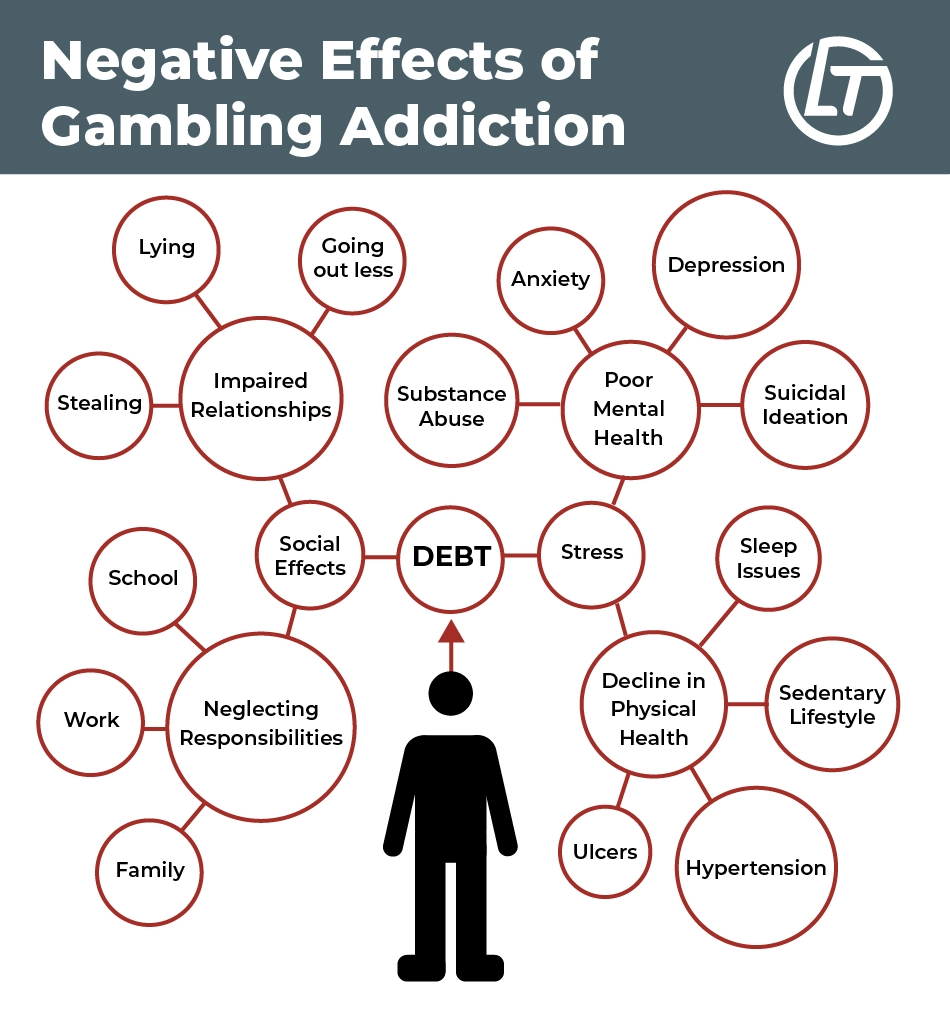
Anxiety, Depression, and Mental Health Side Effects
Gambling addiction and problem gambling can have significant mental health side effects, including:
- Anxiety
- Depression
- Poor impulse control
- Stress
- Substance abuse
- Suicidal ideation or attempts
There is also evidence that children in households where gambling is visible are more likely to gamble later, more likely to abuse drugs and alcohol, and at higher risk of developing a gambling disorder the earlier they’re exposed.
Physical Symptoms of Stress
People diagnosed with gambling addiction can experience physical side effects related to the stress and anxiety of their addiction and its side effects. These side effects include:
- Cardiovascular disease
- Hypertension
- Difficulty sleeping
- Peptic ulcers
Financial Losses and Debt
People with gambling addiction or disorder will often place increasing bets, chasing the high of their addiction, often with little regard for the consequences. Problem gamblers may lose their savings, go into debt, or lose their job and income. Studies have shown that lower-income households disproportionately feel the financial impact of sports betting.
Important Studies About Gambling Addiction
Some studies have indicated links between legalized sports betting and problem gambling behavior. A number of important studies have examined the side effects of gambling addiction, while others have further explored the effects of electronic gambling specifically.
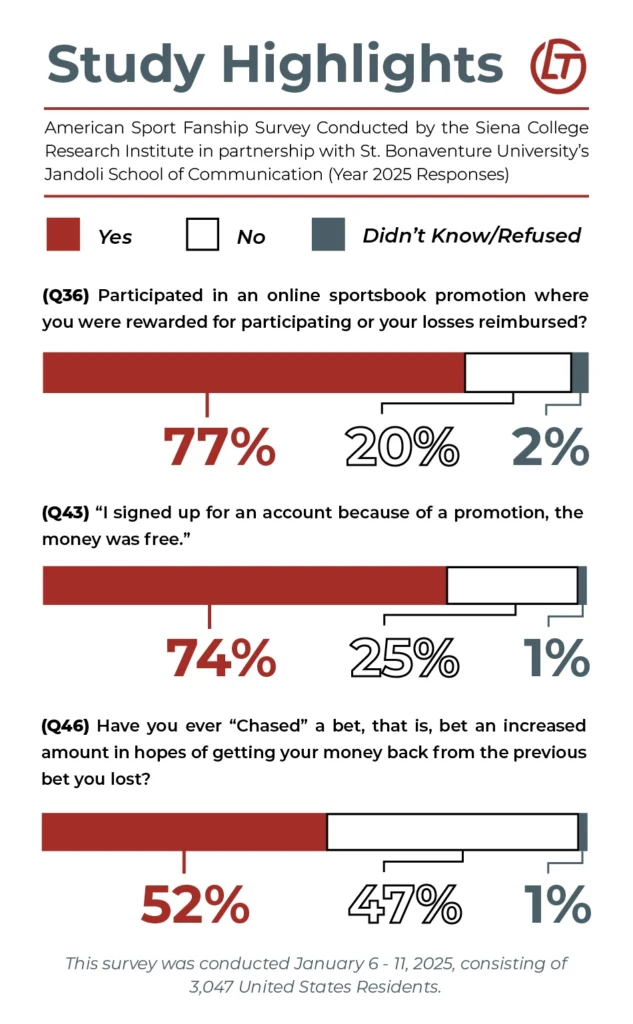
Important study: American Sport Fanship Survey Conducted by the Siena College Research Institute in partnership with St. Bonaventure University’s Jandoli School of Communication
This poll, conducted between January 6 – 11, 2025, surveyed 3,047 US residents about sports fandom and included a number of questions about electronic gambling. Its findings include:
- 22% of survey respondents had an account with an online sportsbook, including 50% of men aged 18-49.
- 44% reported checking an online sportsbook at least once a day to check odds or look for potential bets.
- 83% of respondents who had an account reported placing a bet
Of respondents who had accounts and placed bets:
- 56% of respondents who bet using online sportsbooks reported “chasing” a losing bet by subsequently wagering more to try to make up for their losses
- 20% reported lying about their betting at some point
- 37% reported feeling like they had bet more than they should at some point
- 20% reported losing amounts of money that made it difficult to meet financial obligations
| Overview: American Sport Fanship Survey Conducted by the Siena College Research Institute in partnership with St. Bonaventure University’s Jandoli School of Communication | |
| Description of Study: | A broad survey about respondents’ sports fandom, which included a set of questions about online sportsbooks and gambling behavior. |
| Published In: | Siena College Research Institute |
| Study Authors | Siena College Research Institute, St. Bonaventure University’s Jandoli School of Communication |
| # of Participants | 3,047 |
| Findings | The survey illuminates the popularity of online sportsbooks and the prevalence of problematic gambling among users. |
Important study: The prevalence of gambling and problematic gambling: a systematic review and meta-analysis
This meta-analysis looked at more than 3,600 reports published between 2010 and 2024 that examined rates of gambling and problematic gambling across different regions and populations globally. Collectively, the reports included 366 distinct samples in 68 different countries and territories, encompassing nearly 3.5 million total participants.
The analysis produced several notable conclusions:
- Approximately 50% of men globally gambled within the 12 months prior to being surveyed, including 61% of men in North America
- Nearly 9% of adults engaged in some type of risky gambling
- Online gambling led to more risky gambling behavior than other types
| Overview: The prevalence of gambling and problematic gambling: a systematic review and meta-analysis | |
| Description of Study: | Systematic review and meta-analysis of 3692 reports published between 2010 and 2024 to estimate the rates of gambling and problematic gambling across broad populations |
| Published In: | The Lancet |
| Study Authors | Lucy T Tran, MSc; Prof Heather Wardle, PhD; Samantha Colledge-Frisby, PhD; Sophia Taylor, MPH; Michelle Lynch, MGH; Jürgen Rehm, PhD; et al |
| # of Participants | 3,441,720 across 380 samples |
| Findings | The analysis concluded that the risk of problem gambling was highest for participants in various forms of online gambling. |
Important Study: The Biopsychosocial Consequences of Pathological Gambling
This 2005 article, published in Psychiatry (Edgmont), examined the physical, psychological, and social consequences of pathological gambling, the term used for gambling addiction at the time of the study. This study was confined to casino gambling but demonstrates a clear link between disordered gambling and various long-term health and social consequences.
It found that pathological gamblers (the term used at the time) developed chronic stress and related symptoms such as sleep deprivation, cardiovascular disease, hypertension, and peptic ulcers; psychological side effects including depression, anxiety, substance abuse, and impulsive behavior; and social consequences, including legal issues and difficulties with interpersonal relationships. It cited other studies that found that between 17 and 24% of pathological gamblers attempt suicide during their lives, and nearly 80% of callers to gambling helplines are suicidal at the time of calling.
| Overview: The Biopsychosocial Consequences of Pathological Gambling | |
| Description of Study: | Literature review of psychological, physical, and social side effects of pathological gambling |
| Published In: | Psychiatry (Edgmont) |
| Study Authors | Timothy W. Fong |
| Findings | Pathological gambling leads to serious stress-related side effects; psychological consequences like depression, anxiety, and suicidal ideation; and social consequences including eroding relationships and contact with the legal system. |
What Damages Can People Sue Sports Betting App Manufacturers For?
People filing a sports betting app lawsuit related to their addiction, losses, and injuries can list multiple damages in their legal complaint. Those damages include:
- Financial losses:
- Some plaintiffs lost hundreds of thousands of dollars, and many found themselves in crippling debt due to their gambling addiction. Others allege losses from bets that the defendants illegally allowed them to place. The lawsuits also accuse the defendants of false or misleading advertising that tricked users into opening accounts and making deposits, then forcing users to either forfeit those deposits or deposit more money at significant risk. All of these losses could result in compensation.
- Pain and Suffering:
- Compensation for psychological harm stemming from a gambling addiction, including anxiety, depression, PTSD, and suicidal ideation.
- Punitive Damages:
- Damages are awarded if a defendant is found to be negligent or reckless. The sports betting addiction lawsuits accuse companies like DraftKings and FanDuel of allegedly deliberately addicting users to gambling, then encouraging their addictions, which could lead to punitive damages being awarded.
- Loss of Consortium:
- Plaintiffs may receive compensation for loss of consortium if their gambling impacted their relationship with their spouse or partner. Many plaintiffs report significant consequences to their personal lives due to their gambling addiction and betting behavior.
Who Qualifies to File a Sports Betting Addiction Lawsuit?
In order to file suit against an online gambling platform, each person has to meet certain eligibility requirements. Our legal partners are focusing on the specific injuries listed below:
- The person lost large amounts of money using a sports betting app.
- The person developed a gambling addiction or other gambling-related mental health condition after using a sports betting app. This could include conditions such as depression, anxiety, PTSD, or suicidal ideation or attempted suicide.
- The sports betting app allowed a user to place bets that were illegal in that user’s state without alerting them. This could include ignoring a state self-exclusion list or cooling-off period for adjustments to user-set betting limits.
- The sports betting app allowed a person under the age of 18 to place bets.
What Proof Do You Need to File a Sports Betting Addiction Lawsuit?
To file a lawsuit against a sports betting app, you’ll need to provide evidence that your use of a sports betting app led to a gambling addiction and related side effects and/or allowed you to place bets illegally. You’ll need to establish your use of the platform, the scale of your losses, and provide evidence and testimony demonstrating your addictive behavior. Medical records, financial statements, your betting history, and testimony from friends and family detailing the effects of your gambling are all helpful here.
Any correspondence you had with employees of the sports betting company is extremely important, especially if it can demonstrate that the company was aware of your addictive behavior and continued incentivizing or encouraging you to bet. If the sports betting company ignored a state-mandated cooling-off period or your presence on a voluntary exclusion list, you should include evidence of that.
8 Steps to File a Sports Betting Addiction Lawsuit
When you have an attorney evaluate your case, they’ll help you compile the evidence and documentation and build your case. They’ll advocate on your behalf in court and potentially work to arrive at a settlement with the company you’re suing. Every case is unique, but yours will follow this general process:
- Consult an Attorney Specializing in Mass Torts and Consumer Protection:
- While the sports betting addiction lawsuits are in their early stages, an attorney experienced in mass torts and consumer protection can help you evaluate your case. They’ll review the details of your experience and help you determine if you should file a lawsuit.
- Gather Relevant Documentation:
- Financial records, activity within the sports betting app(s), medical records, and other documentation of your gambling and its effect on your life will help you make your case.
- File a Claim Within the Statute of Limitations:
- Legal deadlines vary by state, so it’s vitally important to consult with an attorney as soon as possible so you can file your claim in a timely fashion.
- Determine Legal Grounds for the Lawsuit:
- Depending on your circumstances, these will vary, but could include negligence, encouraging a gambling addiction, false advertising, and/or allowing you to bet illegally under state law.
- File the Lawsuit in Court:
- Your attorney will file the lawsuit for you. It may end up as part of a multidistrict litigation (MDL) or proceed on its own.
- Pre-Trial Discovery:
- Both sides gather additional evidence, including medical expert testimony and depositions.
- Settlement Negotiations:
- Your attorney may work to negotiate a settlement with the sports betting company before going to trial. Many mass torts and class action suits end in settlements.
- Trial (If Necessary):
- If you don’t reach a settlement with the defendants, your case will go to trial. Depending on the particulars of your case and where you’re filing it, this may be decided by a judge or be a jury trial.
- Receive Compensation:
- If you reach a settlement, or the judge decides in your favor, you’ll be awarded damages that may include compensation for losses, lost wages, pain and suffering, and punitive damages.
What to Expect When Filing a Sports Betting Addiction Lawsuit
In general, you can expect a long process, especially if the case goes to trial. Settlements can speed up the process.
Compensation will vary depending on the specifics of your case, whether it goes to trial or settles, and other factors. (Typically, your attorney will be paid on contingency depending on the outcome of the trial. You won’t have to pay them unless your suit is successful.)
A lawsuit can seem daunting and overwhelming, but an experienced attorney will give you peace of mind throughout the process.
What is the Deadline for Filing a Sports Betting Addiction Lawsuit?
Depending on where you live, the statute of limitations on this type of lawsuit will vary. In most states, the statute of limitations is between 1 and 3 years. The timeline on the statute of limitations usually starts either when an injury is discovered (for example, a formal diagnosis of gambling addiction) or its link to a product is discovered. (If a minor is involved, the statute of limitations may be longer.)
For this reason, it is vitally important to consult an attorney experienced in product liability litigation as soon as possible if you believe you have grounds to sue a sports betting company. They will help you meet filing deadlines, gather the evidence and documentation you need, and guide you throughout the process.
Sports Betting Addiction Lawsuit Settlements and Awards
While there have been limited settlements in some lawsuits against DraftKings and FanDuel, the major addiction-related lawsuits are all in their early stages. It is too soon to tell what the settlements and awards might be, but they will depend on a variety of factors.
Factors Affecting the Value of a Sports Betting Addiction Lawsuit
The value of a sports gambling addiction lawsuit will depend on a number of factors, both in the specific personal experience of the plaintiff and the broader pattern of behavior of the defendant(s). Some factors include:
- Scale of losses: Some plaintiffs lost hundreds of thousands of dollars to gambling apps. Larger losses could lead to larger awards, if it is decided the defendant engaged in predatory tactics.
- Impact on Life: Plaintiffs who experienced job loss, psychological and physical side effects of a gambling addiction, or impact on their relationship with their family could be eligible for increased damages.
- Negligence or Misconduct: If the lawsuits successfully establish that online gambling companies deliberately targeted gambling addicts, it could lead to the awarding of punitive damages. Individual circumstances, such as a VIP host providing a problem gambler with bonuses to entice them to keep betting, may be a factor.
Learn More About Sports Betting Addiction Lawsuits From Our Legal Team
It can be difficult to talk to anyone about an addiction, let alone file a lawsuit. Feelings of guilt or shame are common. Asking for help can be hard, and that may be even more true for problem gamblers. For example, one study concluded that only 1 out of every 5 people with a gambling problem seeks help for it.
But you don’t have to go through this alone. Our legal partners are experienced and here to help you through every step of the process of holding sports gambling companies accountable. They can answer questions, help you determine how strong your case is and if you should consider filing a lawsuit, and guide you through the filing process if you decide to pursue a suit.
If you suspect you have grounds for a lawsuit, speaking with a legal expert can help you understand your options. We can confidentially connect you to our trusted partners and help you take the first step toward a resolution.
Get A FREE Case Review
Contact Us TodayFAQs
Yes, you can sue a company
The terms and conditions of each platform often require claims to go into arbitration, which can prevent lawsuits from being filed in some circumstances. Lawsuits may still move forward if these are found to be unenforceable. One lawsuit accuses DraftKings of deliberately obscuring its terms and conditions.
It’s too early to tell. This will become more clear as cases either settle or move to trial.
Yes. Gambling disorder is recognized in the DSM-5.
If you’re concerned about your or a loved one’s gambling, contact the National Problem Gambling Helpline. You can also fill out a self-assessment or speak to your doctor or a mental health professional.
If you can prove that the company was negligent, coercive, or broke state or federal laws, you may still have grounds for a lawsuit.
Contact Us Today
"*" indicates required fields