Get a FREE Case Evaluation
"*" indicates required fields

Quick Facts: Ketamine
- Active Ingredient: Ketamine hydrochloride
- Drug Used For: Approved usage: anesthetic Off-label: depression, bipolar disorder, intervention for suicidal ideation, other psychiatric treatment
- Potential Severe Complications: Psychosis, respiratory depression, cardiac events, stroke, coma
- Lawsuit Type: Individual, civil lawsuits
- Lawsuit Status: Active
Ketamine Lawsuit – October 2026 Update
People are filing ketamine lawsuits alleging that clinic staff and doctors caused them harm. In recent years, for-profit ketamine clinics have opened across the U.S. These clinics offer off-label treatment with ketamine for various psychiatric conditions, including major depressive disorder and bipolar disorder.
However, a lack of standardized clinical guidelines for its use and the availability of telehealth prescriptions for at-home use have created a dangerous set of conditions for some patients.
Several wrongful death and personal injury lawsuits have been filed against ketamine therapy clinics, alleging negligent practices that resulted in death, injuries, and sexual assaults. These lawsuits are in their early stages. But with hundreds of clinics operating in a loosely regulated market and the rate of ketamine poisonings rising, the scope of potential harm is much wider and could lead to many more lawsuits.
Ketamine Clinic Lawsuit Timeline & News – October 2026
July 14, 2026: Study: Ketamine May Give Short-Term Relief for Major Depression, Suicidal Ideation
Ketamine and esketamine therapy may offer quick short-term symptom relief to patients suffering from major depressive disorder, according to a new study comparing the effectiveness of different treatments. The study also examined transcranial magnetic stimulation (rTMS) and electroconvulsive therapy (ECT). It found that these other treatments may be more effective at providing long-term relief than ketamine and esketamine.
May 6, 2026: IV Ketamine Therapy May Help Some People Fight Suicidal Thoughts And Depression
According to a new meta-analysis published in JAMA Psychiatry, IV ketamine therapy can quickly reduce suicidality and depressive symptoms. Analyzing data from 26 clinical trials, the authors found that patients who took ketamine via IV saw their symptoms subside more quickly than control groups. They called for more research into the safety and effectiveness of ketamine usage for depression treatment.
March 18, 2026: Woman Prescribed At-Home Ketamine Treatment Passes Away
A woman in New York was prescribed an at-home ketamine treatment by an online provider. Shortly after taking the treatment, her mother found her unresponsive. She was later pronounced dead at the hospital. The woman, who was a domestic violence survivor, had been prescribed ketamine to treat depression. A doctor contracted by an online therapy provider called Better U prescribed the woman ketamine, despite knowing she was prescribed and taking xanax. The two drugs can interact. Surviving family members have filed a lawsuit against Better U, alleging her death was avoidable.
March 3, 2026: Lawmakers in Georgia Reject Law About Ketamine Clinic Oversight
Lawmakers in Georgia were considering HB 717, which proponents say would have provided much-needed oversight of ketamine clinics in the state. The law, backed by the Georgia Composite Medical Board, would have required specially trained physicians to have majority ownership of the state’s ketamine clinics. Critics of the bill said it did very little to protect patients and instead would secure market access for a small group of physicians. The law was rejected by a 73-88 vote.
November 3, 2025: Parents of Florida Man File Wrongful Death Lawsuit Against Ketamine Clinic After Overdose
The parents of 27-year-old Philip Ward are suing Mindbloom, a venture-backed ketamine therapy telehealth clinic. Ward died in October 2023 of ketamine toxicity combined with hypertension. The lawsuit accuses Mindbloom of ignoring Ward’s history of risky medical conditions and substance abuse, his use of Sparvato (esketamine for depression), and behavioral red flags that should have triggered a review of his prescription. According to the plaintiffs, Mindbloom negligently prescribed Ward at-home ketamine therapy, leading to his death.
October 22, 2025: Clinical Trial Finds No Evidence That Ketamine Is an Effective Depression Treatment
A double-blind clinical trial conducted at an inpatient facility in Ireland compared the effectiveness of ketamine therapy to a placebo in a group of patients with moderate to severe depression. After 8 weeks of treatment, researchers found no difference in outcomes between ketamine and the placebo. Rigorous clinical trials like this one cast doubt on the marketing claims made by ketamine clinics and highlight the need for additional research.
September 22, 2025: Mother of Wyoming Woman Files Wrongful Death Lawsuit Against Ketamine Clinic
The mother of a woman who killed herself and her four children after taking ketamine at home has filed a wrongful death lawsuit against the prescribing clinic. The suit accuses Sage Psychiatry Services of negligence for prescribing off-label ketamine therapy to Tranyelle Harshman, who was already taking anti-anxiety medication and suffered from postpartum depression, PTSD, and other psychiatric disorders. The suit also alleges the clinic failed to provide adequate patient monitoring.
November 7, 2023: Study: Ketamine Clinics Making False or Misleading Advertising Claims
A cross-sectional study of ketamine clinics operating in Maryland found that many of the claims made in advertisements were misleading or outright false. The study’s authors found clinics advertising a wide range of off-label uses for ketamine therapy, ranging from mental health treatments to Lyme disease and substance abuse treatment. The study found clinics frequently failed to mention the risks of ketamine therapy, and nearly 60% did not disclose that they were advertising uses that have not been approved by the FDA. One advertiser outright lied about FDA approval.
This study, called “False or Misleading Claims in Online Direct-to-Consumer Ketamine Advertising in Maryland,” highlights lax regulations and the threat to consumers targeted by ketamine advertisements, who may opt for ketamine therapy without understanding its risks.
October 10, 2023: FDA Issues Warning Against Use of Compounded Ketamine for Psychiatric Treatment
With growing public interest in the use of ketamine for off-label mental health treatment, the FDA issued a warning about the potential risks of off-label use. The warning stressed that the FDA has not approved ketamine for psychiatric treatment, and that there is no evidence it is safer or more effective than approved treatments. It highlighted the possible side effects of ketamine, including slowed breathing, high blood pressure, and psychiatric side effects, and pointed out that home use adds additional risk because the patient is not monitored by a healthcare professional.
On this page:
Ketamine Clinic Lawsuit Timeline & News – October 2026
What Are Ketamine Therapy Lawsuits About?
Why Are People Filing Ketamine Lawsuits?
Whom Are People Filing Ketamine Lawsuits Against?
What Is Ketamine and How Does It Work?
Injuries and Serious Side Effects Potentially Caused By Ketamine
Studies Linking Ketamine and Psychiatric Side Effects
FDA Warnings About Ketamine Therapy
What Damages Can People Sue Ketamine Clinics and Providers For?
Who Qualifies to File a Ketamine Lawsuit?
8 Steps to File a Ketamine Lawsuit
What is the Deadline for Filing a Ketamine Lawsuit?
Potential Average Settlement Amounts in a Ketamine Lawsuit
What Are Ketamine Therapy Lawsuits About?
Ketamine therapy lawsuits have been filed by patients and surviving loved ones who allege that ketamine therapy caused patients harm. Ketamine is increasingly used as an off-label treatment of mental health disorders such as treatment-resistant depression and bipolar disorder. The market for ketamine clinics is expected to grow significantly through the end of the decade.
Several lawsuits have been filed against ketamine clinics and individual doctors alleging wrongful death due to negligence in their prescription of ketamine. In one case, a Wyoming mother killed her four children and herself after being prescribed at-home ketamine therapy. In another, a Florida clinic is facing a lawsuit after a 27-year-old patient died of an overdose.
| Ketamine Lawsuit Information | |
| Main Injuries: | Wrongful death |
| Potential Defendants: | Clinics (including Innerwell (KBS, Inc.), Mindbloom, Inc., and Stella MSO/Field Trip Health.) and individual doctors |
| Mass tort or class action? | Only individual lawsuits, could become a class action or MDL as more cases are filed |
| Have There Been Settlements? | No |
| Active Lawsuit? | Yes |
Why Are People Filing Ketamine Lawsuits?
People are filing ketamine lawsuits after experiencing injuries, long-term psychiatric harms, or the death of a family member after a ketamine treatment. For example, some existing lawsuits accuse the clinics in question of prescribing at-home ketamine therapy to patients whose pre-existing conditions likely should have barred them from receiving such therapy.
Some patients with serious psychiatric disorders report life-changing effects from ketamine therapy. However, because the use of ketamine for mental health treatment is not approved by the FDA, standardized treatment protocols and safety measures are lacking. In many cases, individual clinics and providers devise their own treatment protocols.
Even under FDA-approved usage, ketamine has a range of serious potential physical and psychiatric side effects. A 2023 FDA warning highlighted the risks of off-label use of compounded ketamine, especially use outside a clinical setting where a patient can be monitored for adverse side effects.
Even many experts who support ketamine therapy for psychiatric treatment are opposed to at-home use. Nonetheless, the drug is widely available through telehealth providers, who may be liable for harm and adverse side effects caused by off-label ketamine use prescribed to their clients.
Lawsuit Spotlight
Coplen v. Sage Psychiatry Services LLC
In February 2025, Tranyelle Harshman, a Wyoming woman, killed her four children and herself while in an “altered or dissociative mental state.” These deaths occurred after taking ketamine, according to a lawsuit filed by her family against Sage Psychiatry Services. The lawsuit, filed by Harshman’s mother, Rhonda Coplen, accuses the clinic of negligently prescribing Harshman ketamine for at-home use, then failing to adequately monitor her use. Harshman suffered from depression, postpartum depression, and PTSD, and was also taking the anti-anxiety medication clonazepam. The lawsuit seeks a jury trial and punitive damages.
Lawsuit Spotlight
John and Linda Ward v. Mindbloom, Inc., Enovex Pharmacy, et. al
The parents of a 27-year-old Florida man who died of a ketamine overdose have sued Mindbloom, a venture-backed ketamine telehealth startup, for wrongful death. The lawsuit alleges that Mindbloom should never have prescribed at-home ketamine therapy to Philip Ward due to his medical history, which included risk factors such as hypertension, tachycardia, and substance abuse.
The suit alleges Mindbloom also ignored behavioral red flags, such as missed appointments, that should have led to a clinical review. Prior to becoming a Mindbloom patient, Ward had been using Spravato (esketamine), a nasal antidepressant made from the S-molecule form of ketamine. Despite a Mindbloom employee flagging Ward’s account for verification that his Spravato treatment was complete, the suit alleges that such confirmation never occurred.
In October 2023, Ward died of ketamine toxicity with hypertension. His parents are seeking compensatory, wrongful death, and punitive damages, as well as legal fees.
Whom Are People Filing Ketamine Lawsuits Against?
Lawsuits have been filed against clinics providing ketamine for off-label in-clinic and at-home use, as well as individual clinic employees who may have mishandled administration.
Some of the potential defendants in ketamine clinic lawsuits include:
- Innerwell (KBS, Inc.)
- Mindbloom, Inc.
- Stella MSO (doing business as Field Trip Health)
- Other ketamine therapy clinics
- Individual doctors
Information for some of the defendants is listed below.
Defendant: Ketamine Clinics
Ketamine therapy clinics have proliferated since the COVID-19 pandemic as public interest in the use of psychoactive drugs for psychiatric treatment, as well as the expansion of telehealth. Clinics typically partner with a pharmacy that compounds and provides the drugs for their patients. This allows clinics to advertise usage that is not approved by the FDA. A lack of standardized, approved treatment protocols means that clinical approaches vary widely.
Defendant : Doctors and Providers Who Administer Ketamine
Some lawsuits also name the individual clinic employee who prescribed ketamine. Doctors have also faced criminal charges, including accusations of fraud and abuse. In 2025, three doctors pleaded guilty to charges that they supplied ketamine to actor Matthew Perry before his death from the drug. One of them, Jasveen Sangha, allegedly had supplied ketamine to Hollywood celebrities since 2019, earning her the nickname “Ketamine Queen.”
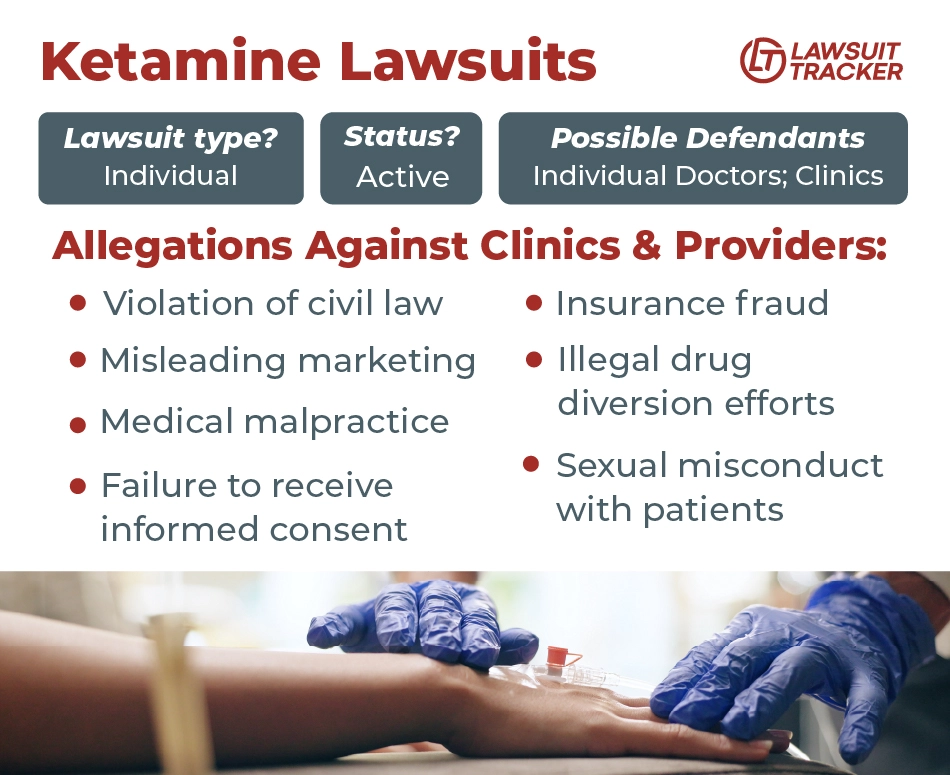
Allegations Against Ketamine Clinics and Providers
Several wrongful death lawsuits allege that clinics improperly prescribed ketamine for at-home use, ignoring patients’ medical histories, as well as warning signs during treatment.
Some of the allegations against ketamine clinics and providers include that injuries or deaths occurred because providers and clinics:
- Prescribed ketamine to people with contraindications
- Prescribed ketamine for at-home use with inadequate oversight
- Sexually or physically assaulted patients during ketamine treatment
- Did not properly monitor patients during and after therapy
- Advertised ketamine therapies using false or misleading claims
- Did not properly warn patients about the risks associated with ketamine therapy
- Did not inform patients that ketamine is not FDA-approved to treat psychiatric disorders
What Is Ketamine and How Does It Work?
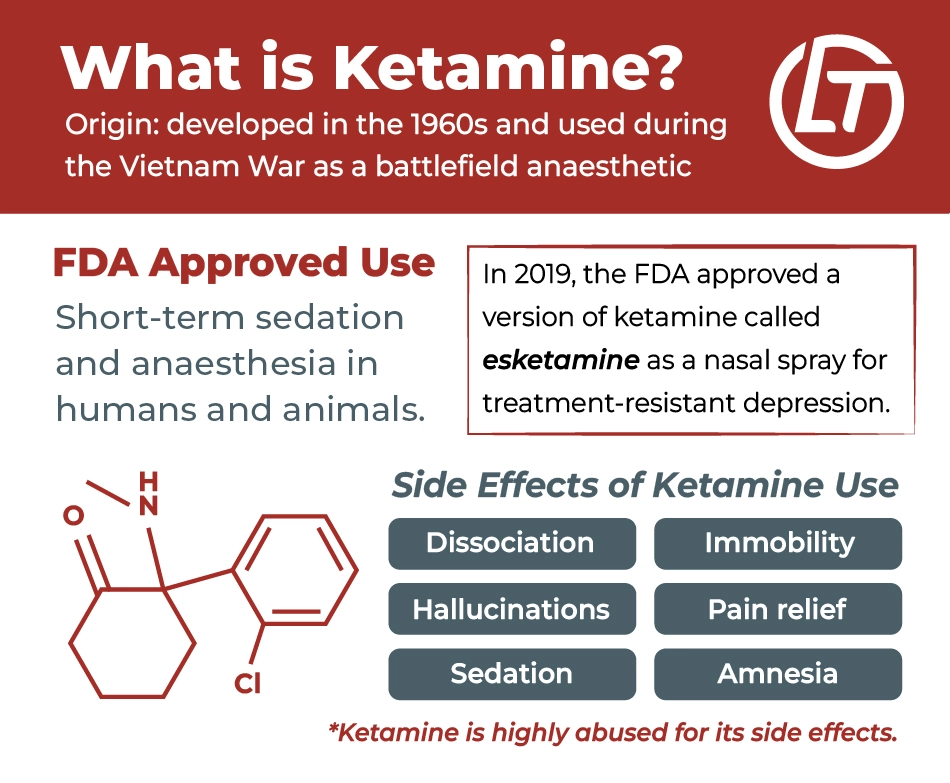
Ketamine was developed in the 1960s and used during the Vietnam War as a battlefield anaesthetic. It continues to see common use as a surgical general anaesthetic. For decades, it has also been abused as a party drug and is commonly mixed with MDMA, amphetamines, and other controlled substances.
Ketamine works by blocking the N-methyl-D-aspartate neurotransmitter, blocking the transmission of pain signals to the brain and inducing a feeling of dissociation. It also causes hallucinations.
What Conditions Is Ketamine Used to Treat?
Ketamine is only approved in the form of an injection for use as an anaesthetic. It has not been approved by the FDA for any psychiatric treatment. In 2025, the FDA published a warning about the use of compounded ketamine (such as the oral tablets many ketamine clinics prescribe) for off-label psychiatric treatment.
A chemically similar drug, esketamine, has been approved in nasal spray form under the brand name Spravato to treat certain types of severe depression. Esketamine is the S-molecule form of ketamine, one of two mirror-image molecules that make up the drug.
Esketamine is a Schedule III controlled substance subject to a Risk Evaluation and Mitigation Strategy (REMS) due to potential serious adverse side effects. The FDA REMS requires Spravato to be administered in a clinical setting where patients can be monitored for side effects for at least 2 hours after taking the drug.
Why Are People Taking Ketamine Off-Label?
A combination of factors has led to off-label use of ketamine. The first is genuinely promising research indicating it can be potentially effective as a psychiatric therapy, including for the treatment for depression or intervention in the case of suicidal ideation. The second factor is a regulatory framework that has failed to keep up with changes to consumer behavior and the ways people access healthcare.
Some companies have taken advantage of a loophole in FDA advertising regulations to market drugs for off-label usage. The FDA has strict requirements for advertising from drug manufacturers, requiring companies that manufacture or distribute drugs to advertise only approved uses. However, those rules don’t apply to other entities, like telehealth clinics, which advertise the drugs while relying on other companies to actually prescribe and distribute them. This means companies can advertise using claims for off-label use that range from simply not approved to misleading or outright false.
Injuries and Serious Side Effects Potentially Caused By Ketamine
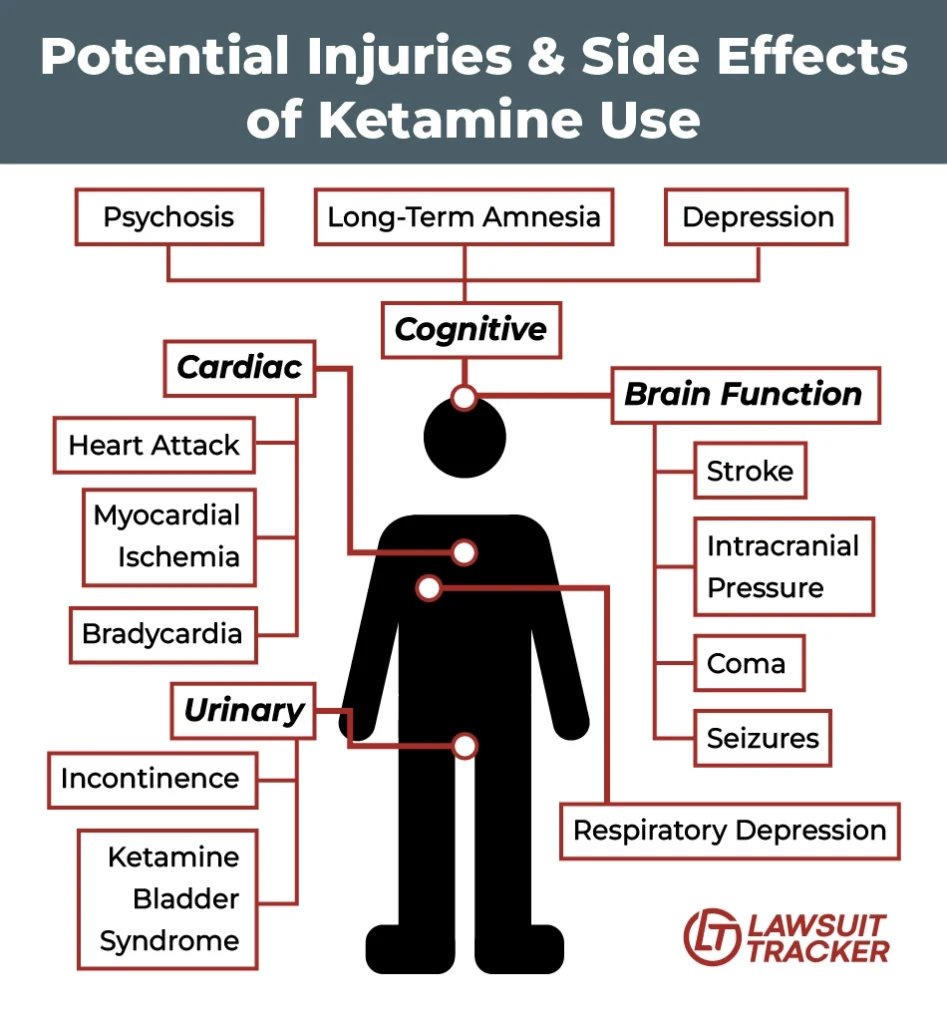
Ketamine can have a range of serious physical and psychological side effects, which may be more likely with repeated usage, as opposed to the approved one-off use as an anaesthetic. Risk factors for side effects include heart disease and high blood pressure, as well as the use of certain medications, including some prescribed to treat depression.
Psychosis
Psychosis is a general term for a group of symptoms, such as hallucinations and delusions, where an individual is disconnected from reality. Psychosis is often caused by psychiatric conditions, such as schizophrenia or bipolar disorder, by physical conditions, or as a side effect of substance abuse. Ketamine is known to cause symptoms similar to psychosis.
Long-term Cognitive Effects
One issue with studies of ketamine use for psychiatric treatment is that they typically only look at short-term use. There is evidence that long-term ketamine use can lead to significant changes to brain structure and function and have psychiatric effects, including depression, amnesia, and difficulty concentrating. (NMDA, the neurotransmitter blocked by ketamine, is associated with memory formation.)
Cardiac Events
Patients with preexisting heart conditions or hypertension can be vulnerable to life-threatening side effects of ketamine, such as stroke, reduced blood flow to the heart, or increased intracranial pressure. Outcomes of these events can be severe, up to and including death. Even nonfatal strokes can cause long-term side effects like cognitive impairment and paralysis.
Urinary Tract Damage
Long-term ketamine usage can damage the urinary tract and cause bladder pain, incontinence, and other symptoms that can severely degrade quality of life. With continued chronic usage, this can cause irreversible damage and may require reconstructive surgery. Around 20% of recreational ketamine users develop ketamine bladder syndrome, although some limited studies place the number much higher.
Toxicity or Overdose
In addition to the above side effects, ketamine overdose or toxicity can have a variety of acute, potentially life-threatening side effects, including:
- Seizures
- Coma
- Low blood pressure
- Respiratory depression (dangerously slow or shallow breathing)
Bradycardia (dangerously slow heart rate, below 60 bpm)
The FDA wants to receive reports of injuries and side effects people experience after using a medical device. The FDA Adverse Event Reporting System (FAERS) informs future decisions about drugs. If you have a ketamine complication you want to report, you can learn more about submitting a Medwatch Voluntary Report here.
What Can Go Wrong During Ketamine Therapy?
Because ketamine can have serious and immediate side effects such as cardiac arrest, medical experts generally agree that patients taking ketamine should be monitored by a professional for side effects, even in the case of off-label therapy. Spravato (esketamine), the FDA-approved antidepressant nasal spray that is chemically similar to ketamine, is only administered under supervision. A critical allegation of the ketamine lawsuits is that clinics negligently prescribed ketamine for at-home use.
Studies Linking Ketamine and Psychiatric Side Effects
Ketamine has been in use for a long time, and its side effects are well understood, with a growing body of research into its psychiatric impacts. However, ketamine’s off-label use to treat psychiatric conditions is emerging and less studied. Here are some studies that have evaluated the use of ketamine to treat depression, bipolar disorder, and other mental health disorders.
Important Study: Serial Ketamine Infusions as Adjunctive Therapy to Inpatient Care for Depression
Published in October 2025, this double-blind, randomized, placebo-controlled clinical trial assessed the effectiveness of ketamine therapy for the treatment of moderate to severe depression. The study examined a group of 62 patients with moderate to severe depression at St Patrick’s University Hospital in Dublin, Ireland. Patients were given either ketamine infusions or a psychoactive placebo, midazolam, while receiving their usual inpatient psychiatric care. The study found no evidence that ketamine therapy was more effective than the placebo for depression treatment.
| Overview: Serial Ketamine Infusions as Adjunctive Therapy to Inpatient Care for Depression | |
| Description of Study: | Clinical trial assessing the effectiveness of ketamine therapy alongside usual inpatient care for the treatment of depression |
| Published In: | JAMA Psychiatry |
| Study Authors | Jelovac A, McCaffrey C, Terao M, et al |
| # of Participants | 62 patients hospitalized with moderate to severe depression |
| Findings | Ketamine therapy was no more effective than the placebo in treating depression among study participantsSome of the positive effects reported in previous, unblinded studies of ketamine for depression treatment may have been inflated by the placebo effectThis study is consistent with other studies that found ketamine is not an effective depression treatment |
Important Study: Association of Ketamine With Psychiatric Symptoms and Implications for Its Therapeutic Use and for Understanding Schizophrenia
A meta-analysis published in 2020 in JAMA Network Open concluded that ketamine use led to a higher risk of symptoms of psychosis similar to schizophrenia. It also concluded that this risk was higher when ketamine was taken orally in addition to an intravenous drip. The analysis examined 36 studies with a total of 725 individuals, and included only studies with a placebo component. Based on the relationship between ketamine and symptoms similar to schizophrenia, and the increased risk when the drug was taken as a bolus (pill), the study concludes by recommending that ketamine therapy be delivered by infusion only.
| Overview: Association of Ketamine With Psychiatric Symptoms and Implications for Its Therapeutic Use and for Understanding Schizophrenia: A Systematic Review and Meta-analysis | |
| Description of Study: | This analysis examined the relationship between ketamine use and symptoms of psychosis. |
| Published In: | JAMA Network Open |
| Study Authors | Katherine Beck, MRCPsych; Guy Hindley, MBBS; Faith Borgan, PhD; et al. |
| # of Participants | 725 across 36 studies |
| Findings | Ketamine usage is associated with an increased likelihood of symptoms of psychosisSymptoms are more likely when ketamine is taken via a bolus (pill) |
Important Study: Brain Changes Associated With Long-Term Ketamine Abuse, A Systematic Review
This study found that long-term ketamine abuse led to changes in brain composition across a set of 16 studies. The study focused on chronic recreational users and noted that dosage was generally larger than what would be administered clinically.
The analysis found that chronic ketamine abuse led to changes in gray and white matter, as well as to certain brain functions. It concluded that this may explain long-term psychological side effects associated with the drug.
| Overview: Brain Changes Associated With Long-Term Ketamine Abuse, A Systematic Review | |
| Description of Study: | A systematic review looking at the long-term effects of ketamine on the brain |
| Published In: | Frontiers in Neuroanatomy |
| Study Authors | Jurriaan F. M. Strous et al. |
| # of Participants | 440 chronic recreational ketamine users across 16 studies |
| Findings | Chronic ketamine abuse alters brain structure, which may account for psychological side effects |
FDA Warnings About Ketamine Therapy
In October 2023, the FDA published a warning about the use of compounded ketamine for psychiatric treatment. The warning highlighted that:
- Ketamine has not been approved to treat psychiatric disorders
- Use of ketamine without monitoring by a healthcare professional for adverse reactions increases patient risk
- Ketamine has a number of potential adverse side effects, including elevated blood pressure, slowed breathing, urinary tract problems, and psychiatric side effects
- Compounded ketamine provided by telemedicine clinics or other providers also carries additional risks, because patients may not be fully informed of potential side effects
Is Ketamine Approved to Treat Depression, Anxiety, or PTSD?
Ketamine has not been approved to treat depression, anxiety, PTSD, or any other psychological condition. It has only been approved for intravenous use as an anaesthetic.
What Damages Can People Sue Ketamine Clinics and Providers For?
- Wrongful Death (if applicable):
- Several ketamine lawsuits have been for wrongful death due to alleged negligence on the part of clinics and prescribers, which could lead to compensation for the emotional distress of surviving family members, funeral expenses, and other damages.
- Punitive Damages:
- Punitive damages, awarded if the court rules that a defendant acted recklessly or negligently, are possible in the ketamine lawsuits. For example, it is found that defendants ignored a patient’s medical history and their own internal warning systems when prescribing ketamine therapy for at-home use.
- Medical Expenses:
- Plaintiffs may be compensated for the cost of hospital stays, tests, ongoing treatments, and other medical expenses.
- Pain and Suffering:
- In a wrongful death suit, this could include compensation for the grief and emotional distress of losing a loved one.
- Loss of Income:
- Compensation for lost wages and lost future earning potential. In a wrongful death case, this would account for the earning potential of the deceased.
- Other Out-of-Pocket Expenses:
- You may be compensated for other expenses related to your injuries (such as travel to see a specialist or lodging during a hospital stay)
- Legal Fees and Costs:
- You may be compensated for filing fees, attorney fees, and other court expenses
Who Qualifies to File a Ketamine Lawsuit?
Ketamine lawsuits are still taking shape. Future lawsuits may look very different from the ones that have already been filed.
Contact our legal partners if you or a family member has experienced any of the following:
- You experienced major side effects from off-label ketamine therapy, especially if you believe you were not adequately warned about them
- You feel you were negligently prescribed off-label ketamine therapy (for example, one that didn’t take into account your medical history)
- You were physically or sexually abused by an employee of a ketamine clinic
- You were a victim of insurance fraud perpetrated by one or more employees of a ketamine clinic
This is not an exhaustive list. If you believe you were wronged by a ketamine doctor or clinic in some other way, reach out. Our legal partners will work with you to determine if you have a case.
What Proof Do You Need to File a Ketamine Lawsuit?
To file a ketamine lawsuit, you will need to prove that a clinic acted illegally and/or negligently towards you or a loved one. This action could have been prescribing ketamine therapy without considering medical and mental health history, insurance fraud, abuse, or something else.
You will also need to show a clear causal timeline of events; medical records related to initial treatment and treatment of any side effects; and evidence of physical, emotional, and financial impact. You’ll also need to gather statements from witnesses, such as family members, who can corroborate your experience and the impact on your life.
Evidence of Ketamine Use and Timeline of Use
- You’ll need proof you were prescribed off-label ketamine therapy and a clear timeline showing it predated the harm you experienced
Evidence About Your Diagnosis and Treatments
- Medical records:
- Relevant medical records, including prescriptions, hospital, and diagnostic records (if applicable)
- Clinic correspondence:
- Emails, chat transcripts, text messages, and other correspondence with the ketamine clinic
- Treatment records:
- Records of your ketamine therapy treatments
- Records of any treatment you received for side effects of ketamine therapy
- Pharmacy records:
- Records of your ketamine therapy prescription
Evidence Showing Your Losses
- Proof of Damages:
- Financial Records: Medical bills, pay stubs showing changes to your income, and expenses related to your injury help establish financial losses.
- This could also include receipts for out-of-pocket expenses related to treatment or care.
- Impact on Quality of Life: Evidence of long-term psychological or physical side effects that affected your quality of life.
- Psychological impact: Notes and records from therapy or counseling can show the psychological impact of the harm you experienced.
- Financial Records: Medical bills, pay stubs showing changes to your income, and expenses related to your injury help establish financial losses.
Testimony From You and Your Family
- Personal Testimony: You’ll need to be ready to give your account of your experience with ketamine therapy and the resulting harm
- Witness Testimony: Your family, friends, and coworkers can support your account and speak to the impact on your life
8 Steps to File a Ketamine Lawsuit
The process to file a lawsuit normally adheres to the following steps. Depending on the specifics of your case, these may differ slightly. An experienced attorney will help guide you through the process and argue your case.
- Consult an Attorney Specializing in Product Liability:
- Ketamine therapy lawsuits are in their very early stages. However, because the market has grown so quickly, there is a high potential for more cases. If you believe you or a loved one has been harmed by ketamine therapy, an experienced attorney can help determine if you have a case.
- Gather Relevant Documentation:
- Your medical history, correspondence with the therapy provider, evidence of side effects, medical bills, and other materials can support your case. Your attorney can help you gather these documents.
- File a Claim Within the Statute of Limitations:
- It is important to file a lawsuit before the statute of limitations runs out. Each state sets its deadlines differently, so if you believe you have a case, don’t wait to speak to an attorney.
- Determine Legal Grounds for the Lawsuit:
- Your attorney will help you determine the legal grounds for a lawsuit. Factors like the scope of harm or if a clinic or doctor failed to take your medical history into account when prescribing ketamine therapy will play a role in this determination.
- File the Lawsuit in Court:
- Your attorney will file this for you. As ketamine therapy lawsuits develop, it’s possible they will evolve into an MDL, which you may be able to join.
- Pre-Trial Discovery:
- In preparation for a trial or settlement, the plaintiff and defense will gather evidence and build their case. This can include documentation, expert testimony, depositions, and other evidence.
- Settlement Negotiations:
- Sometimes, a settlement is preferable to a trial, and defendants in lawsuits may prefer to settle in order to keep evidence from being made public, to avoid admitting wrongdoing, or for other reasons. Your attorney will advise you on whether this is the best option, and handle negotiations.
- Trial (If Necessary):
- Absent a settlement, your case will go to trial. This may or may not be a jury trial, depending on the case and jurisdiction.
- Receive Compensation:
- If the case is decided in your favor, you will receive damages as determined by the judge and/or jury. This compensation will also be used to pay your attorney fees.
What to Expect When Filing a Ketamine Lawsuit
A lawsuit can take a long time. The pretrial process, where you and your attorney are assembling evidence, building a case, and conducting pretrial discovery, usually lasts much longer than the trial itself. The defendants may try to have a case dismissed or prevent certain evidence from being used in a trial.
It is therefore vitally important to gather as much evidence so your attorney can build the strongest case possible. The process can also be stressful and emotional, but having an experienced lawyer will help you navigate it.
Compensation from a suit will depend on factors like the severity of harm and whether a case settles or goes to trial. Attorney fees are typically contingent on compensation, meaning you won’t owe upfront attorney fees.
What is the Deadline for Filing a Ketamine Lawsuit?
The statute of limitations is the time period in which a lawsuit must be filed, and typically begins when an injury is discovered. States set their own statutes of limitations. Most are between 1 and 3 years, although some states are as long as 6. (In wrongful death cases, and cases involving minors or incapacitated individuals, statutes may be longer.)
It is very important to consult with an attorney as soon as possible if you believe you’ve suffered harm as a result of ketamine therapy. If the statute of limitations expires, you will not be able to file a lawsuit and will lose any chance at compensation.
- Discovery Rule:
- The Date of Discovery is the date an injury is discovered or when it is linked back to a drug or device, if that wasn’t clear at diagnosis. In most cases, this starts the clock on the statute of limitations.
- Wrongful Death Claims: The statute of limitations for wrongful death usually begins at the date of death, and may be longer than other types of injuries.
- Deadline Considerations:
- Take early action: to make sure you don’t miss any deadlines, start gathering documentation and consult an attorney as soon as you can.
Potential Average Settlement Amounts in a Ketamine Lawsuit
Ketamine lawsuits are in their very early stages, so average settlement amounts have not been determined. Factors like the magnitude of harm, level of negligence on the part of the clinic, and whether a wrongful death was involved can all play a role alongside many other factors. There is no guaranteed settlement amount and some people may not receive compensation.
Factors Affecting the Value of a Ketamine Lawsuit
The value of any individual lawsuit will vary based on its specifics. Some potential factors that may influence the value of a ketamine clinic lawsuit include:
- Severity of Injury: Higher compensation may result from more severe injuries or wrongful death.
- Negligence or Misconduct: The court may award punitive damages if they find that a ketamine clinic improperly prescribed at-home therapy, ignored internal warnings, or was otherwise negligent.
- Impact on Life: Side effects from ketamine therapy can have a significant effect on a plaintiff’s life and relationships, increasing potential compensation.
- Motivation to settle: if a defendant is particularly motivated to settle for some reason, it could raise the value of a suit.
Learn More About Ketamine Lawsuits From Our Legal Team
Our legal team is reviewing cases from people who have experienced injuries or losses after receiving ketamine therapy from a clinic. If you sought ketamine therapy from a clinic or online provider and experienced harm, please contact our team. We can review the specifics of your case and determine if you are eligible to file a lawsuit with one of our legal partners.
We accept cases on a contingency-fee basis, meaning you only pay for our legal services if we secure you compensation. Our team is ready to answer your questions.
Get a FREE Case Review
Contact Us TodayFAQs
No, the FDA has not approved ketamine for any use other than as a general anaesthetic. However, clinicians are allowed to describe it for off-label usage.
Clinics are taking advantage of a loophole in existing law to market off-label uses of ketamine. However, they may still be found liable for making false or misleading claims.
No, only individual suits have been filed. However, as more and more cases are filed, it could be consolidated into an MDL or class-action suit.
People are suing for a range of negative outcomes. Some have experienced long-term side effects from ketamine therapies, others have lost their lives. Some people have been abused by providers while receiving therapy.
Ketamine clinics and their doctors prescribe ketamine to treat psychiatric conditions like depression and bipolar disorder. However, ketamine is not approved by the FDA to treat these conditions, and the clinics are accused of being underregulated.
People who file successful personal injury lawsuits against ketamine clinics and providers will receive compensation according to their losses. There is no set or average settlement amount, unless one is agreed to in a future class-action settlement.
Contact Us Today
"*" indicates required fields