Get a FREE Case Evaluation

Quick Facts: Olympus Scopes
- Brand Names: Olympus endoscopes, colonoscopes, duodenoscopes, and bronchoscopes
- Device Used For: Endoscopic procedures
- Product type: Medical device and accessories
- Manufacturers With Lawsuits: Olympus Medical
- Potential Severe Complications: Infection, burns, death
- Lawsuit Type: Product liability
- Lawsuit Status: Individual lawsuits
Olympus Scope Infection Lawsuits – September 2026 Update
People are filing lawsuits against Olympus, alleging the company’s reusable endoscopes harbor bacteria and can cause serious infections. Olympus scope lawsuits have been filed by patients who experienced infections they say were caused by contaminated scopes. In recent years, Olympus has issued Class I and II recalls of some of its scopes. It has also recalled a number of scope accessories..
Olympus duodenoscopes, endoscopes, and similar imaging devices are used in many common imaging procedures, such as ERCPs and colonoscopies. Some models of Olympus’ scopes are difficult to properly disinfect between procedures, and have been linked to serious outbreaks of infection from antibiotic-resistant “superbugs” in hospitals around the world.
Patients are suing Olympus for their injuries, alleging the scopes have design flaws that promote pathogen growth and lead to infection. Plaintiffs in these lawsuits allege that Olympus failed to warn physicians and the public of the risks associated with some of its endoscopes.
News About Olympus Scopes Infection Lawsuits & Recalls – September 2026
June 6, 2026: Woman Files Wrongful Death Suit Over Husband’s Alleged Olympus Scope Infection
A woman has filed a wrongful death suit against Olympus after her husband died from a vancomycin-resistant enterococcus (VRE) infection. The suit, filed in federal court in Washington, claims the man contracted the infection from a contaminated Olympus scope. It accuses Olympus of failing to warn patients of the dangers of infection from its scopes, and that they often harbor contamination even when reprocessing guidelines are followed.
April 15, 2026: Olympus Faces Growing Number Of Scope Lawsuits
With growing public awareness of the potential for Olympus scopes to cause severe infections in patients, more and more people are filing suit against the company. Many individuals who developed infections after endoscopic procedures involving an Olympus scope argue that their infections were caused by bacteria or other contamination carried by the scope. If you suffered from a post-procedure infection you believe may have been caused by an Olympus scope, speak to a qualified attorney to assess your eligibility for a lawsuit.
October 14, 2025: Duodenoscope field safety notice
Citing a risk of infection, Olympus issued an urgent safety notice to medical customers regarding its TJF-Q190V duodenoscope, linking the device to 5 injuries and 2 deaths due to contamination. The letter recommends an updated cleaning process and thorough inspection of the device for defects that may potentially harbor contamination.
June 24, 2025: FDA stops import of certain Olympus scopes and accessories
The FDA issues an import alert for certain scopes manufactured in Japan. According to the alert, the facilities manufacturing the devices are not complying with quality system regulations. The alert prevents the devices from being imported into the U.S., but it does not recall devices already in use that were manufactured in the same facility.
: Olympus Scopes Linked to Hospital Infection Outbreaks
With an initial series of infections reported in 2012 in the Netherlands, Olympus scopes are tied to a series of hospital “superbug” outbreaks. Olympus issues a warning in Europe–but not in the United States, where hospitals in Seattle, Los Angeles, and other cities subsequently experience outbreaks from contaminated scopes. Four people die as a result of the Seattle outbreak. In 2018, Olympus was ordered to pay an $80M fine and a $5M forfeiture.
: U.S. Senate Probe Links Olympus Scope Design to More Than 25 Infection Outbreaks
In 2016, a U.S. Senate probe released a report linking Olympus and other brands of scopes to at least 25 outbreaks of infection. The report concludes that the scopes’ design trapped and incubated potentially deadly bacteria. In 2017, following further outbreaks, Senator Patty Murray, the top Democrat on the Senate health committee, sent a letter to Olympus calling on the company to verify the safety of their devices.
: Various Olympus Scopes and Accessories Recalled
Between 2021 and 2025, a number of Olympus scopes and accessories were recalled due to the risk of infection or injury. The design of Olympus scopes continues to place patients at risk, with many of these recalls designated Class I, the most serious level.
See below for a full timeline of Olympus scope and accessory recalls.
On this page:
News About Olympus Scopes Infection Lawsuits & Recalls – September 2026
What is the Olympus Scope Infection Lawsuit About?
Why Are People Filing Olympus Scope Lawsuits?
What Procedures Are Olympus Scopes Used For?
Recalls Involving Olympus Scopes
Studies Examining Endoscopes and Infection
What Damages Can People Sue Olympus For?
Who Qualifies to File an Olympus Lawsuit?
8 Steps to File an Olympus Scope Lawsuit
What is the Deadline for Filing an Olympus Scope Lawsuit?
Olympus Scope Settlements and Awards
Learn More About Olympus Scope Infection Lawsuits From Our Legal Team
What is the Olympus Scope Infection Lawsuit About?
The Olympus scope lawsuit contends that the design of various Olympus endoscopes and accessories is causing serious infections and deaths. Safety warnings and recalls say that some parts of some Olympus’ endoscope models are difficult to fully sanitize. Pathogens left on scopes and accessories can cause serious infections in some patients.
| Olympus Scopes Infections Lawsuit Information | |
| Main Injuries: | Infection, internal bleeding, burns, death |
| Defendants: | Olympus Medical |
| Mass tort or class action? | Currently individual civil cases, but lawsuits could be centralized in the future |
| Have there been settlements? | Yes, in individual cases |
| Active Lawsuit? | Yes |
Why Are People Filing Olympus Scope Lawsuits?
People are filing lawsuits against Olympus Medical due to infections and other injuries sustained after procedures using endoscopes, duodenoscopes, bronchoscopes, colonscopes, and similar devices. These lawsuits claim Olympus knew their scopes could cause serious infections, but they did not do enough to warn patients or reduce the risk.
The devices have been linked to bacterial “superbug” infections and have been subject to a number of recalls and a recent FDA import ban related to malfunctions, infection risk, and compliance failures at certain manufacturing sites.
Plaintiffs, who have suffered from drug-resistant infections, internal bleeding, and other injuries, maintain that Olympus did not take adequate steps to mitigate the risk of infection and other injuries, nor properly warn the public of the dangers. Injured patients are seeking damages to compensate for the financial cost of their injuries, their pain and suffering, and long-term negative effects on their lives.
Allegations Against Olympus
Olympus scopes have been linked to fatal “superbug” outbreaks as far back as 2012. Olympus did not warn officials in the U.S. or report outbreaks in Europe to the FDA in a timely manner. It also did not initially recall the devices, according to reporting at the time.
In 2018, Olympus was ordered to pay $85 million after pleading guilty to charges related to failure to file required adverse event reports. It has also paid over $600 million in criminal and civil penalties for sending bribes and kickbacks to physicians and hospitals.
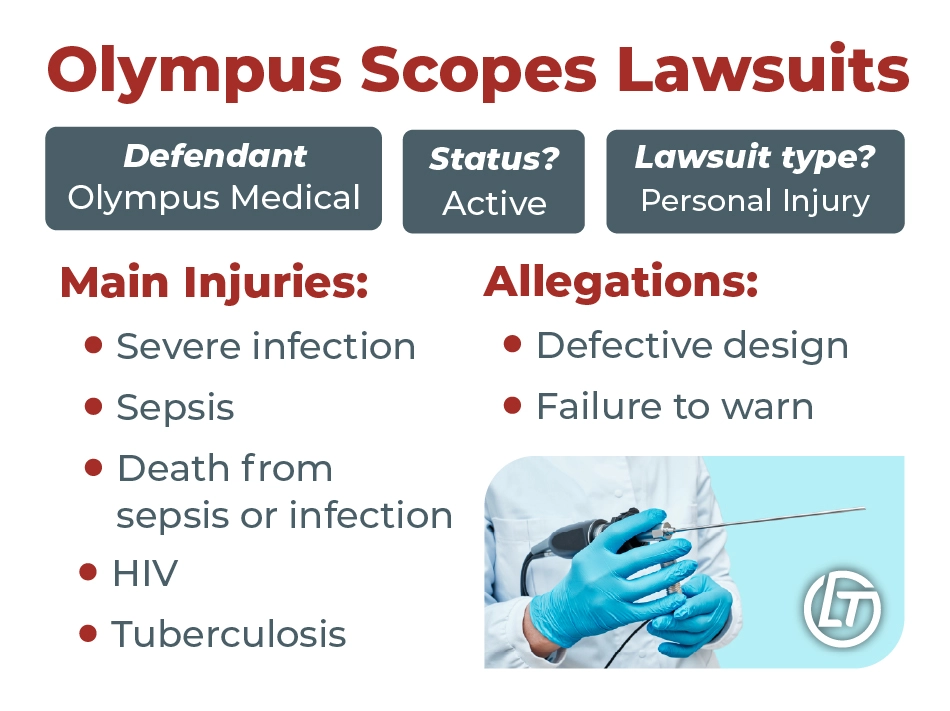
The allegations made in current Olympus scope lawsuits include:
- The scope’s design traps contamination and is difficult to clean
- Official cleaning protocols do not consistently remove pathogens from the reusable endoscopes
- Design flaws of various scope accessories allow bacteria and other pathogens to collect on the components
- Olympus failed to adequately warn the the FDA, physicians, and the public of the potential dangers of its scopes and accessories
What Stage is the Olympus Scope Lawsuit In?
To date, lawsuits against Olympus over injuries allegedly caused by endoscopes and similar devices have been filed individually in jurisdictions across the U.S. The number of Olympus scope recalls in recent years, along with the recent FDA import ban, suggests that more lawsuits could be filed and points to the possibility of an eventual MDL.
What Procedures Are Olympus Scopes Used For?
Olympus is a global manufacturer of medical devices, including a variety of imaging devices commonly used for diagnostic imaging, biopsies, minimally invasive surgeries, and other procedures.
Olympus scopes are commonly used in the following procedures:
- Endoscopic Retrograde Cholangiopancreatography (ECRP): examination of a patient’s bile and pancreatic ducts to diagnose tumors, strictures, and other ailments. The procedure may also involve treatment.
- Colonoscopy: an examination of the large intestine (colon) used to diagnose conditions like colon cancer, IBS, and other gastrointestinal conditions.
- Bronchoscopy: diagnoses issues with a patient’s lungs and airways.
- Enteroscopy: a procedure to diagnose and treat ailments of the small intestine, such as polyps, stricture (narrowing), or blockages.
- Gastroscopy: an examination of the stomach to detect the presence of peptic ulcers, gastritis, cancer, and other conditions that may be causing symptoms such as acid reflux or stomach pain.
Recalls Involving Olympus Scopes
Various Olympus scopes have been recalled. Several of these have been Class I recalls, the FDA’s most severe designation, where there is a “reasonable probability” of “serious adverse health consequences or death.”
Other actions have included safety notices and warnings, and import alerts. Typically, a recall is initiated by the manufacturer based on an abundance of evidence of a manufacturing flaw, but this does not mean they are not liable for injuries allegedly caused by the product.
Here is a timeline of Olympus scope recalls and warnings:
Date: October 2025
Device: TJF-Q190V duodenoscope
Type of action: Field Corrective Action (warning letter from Olympus)
Description: Five injuries and 2 deaths have been linked to this duodenoscope, used in ERCP and other procedures. According to the warning, failure to properly clean and reprocess the device can lead to contamination and infection in the patient. The warning includes updated cleaning instructions and requires practitioners using the device to review reprocessing procedures.
Date: September 2025
Device: ViziShot 2 FLEX endoscopic aspiration needle
Type of action: Class I recall
Description: Olympus initiated a recall of certain lots of these needles, manufactured before May 12, 2025, due to a risk of pieces breaking off from the device during a procedure and obstructing the patient’s airways or otherwise causing lung damage. At the time of the recall, this issue had caused 40 injuries and 1 death. This followed an August 2025 warning letter from Olympus.
Date: June 2025
Device: Various devices
Type of action: Import Alert
Description: This FDA alert applies to specific models of Olympus ureterorenoscopes, bronchoscopes, laparoscopes, and automated endoscope reprocessors manufactured in Japan, due to compliance with quality system regulations. Practitioners in the US already using the devices are able to continue if they are not experiencing any issues. The alert does not cite any known injuries or side effects.
Date: December 2024
Device: MAJ891 Forceps/Irrigation Plug (Isolated Type)
Type of action: Class I recall
Description: This accessory, designed for use with Olympus endoscopes, carries a risk of contamination and infection, sepsis, and other potentially serious conditions when not cleaned properly before reuse. It has been linked to 120 injuries and 1 death. The recall advises healthcare providers to use alternative devices or, if no alternative is available, to closely follow reprocessing procedures, including disassembly for cleaning between procedures.
Date: December 2023
Device: Single Use Distal Cover MAJ2315
Type of action: Class II recall
Description: Olympus recalled this endoscope accessory due to the risk of it detaching during use and causing injury, including tissue damage, bleeding, and burns from the uncovered duodenoscope distal end. The recall did not cite any specific number of injuries or deaths.
Date: June 2023
Device: Laser-Compatible Bronchoscopes
Type of action: Class I recall (correction, not product removal)
Description: Use of certain Olympus bronchoscopes in conjunction with laser therapy or argon plasma coagulation can cause severe burning in the lungs from “airway fire.” This can lead to critical burns, a lack of oxygen to the brain, bleeding, difficulty breathing, and other potentially fatal consequences, with three injuries and one reported death prompting the recall.
Date: January 2021
Device: EVIS EXERA Duodeno Videoscope (TJF Type 190V)
Type of action: Class II recall
Description: This scope was recalled after hospital complaints of trapped mucosal tissue in the device’s distal cover, along with mucosal injuries to patients’ esophagus, stomach, and duodenum. Date: January 2016
Device: Evis Exera II Duodenovideoscope (TJFQ180V)
Type of action: Class II recall
Description: Olympus recalled this scope and replaced the forceps elevator mechanism in an attempt to reduce the risk of infection in patients. The redesigned scopes were later linked to a pneumonia outbreak that infected at least 5 patients.
Other Regulatory Actions Against Olympus
In addition to recalls, corrective actions, and warning letters, the FDA and the courts have cited Olympus for failures that potentially put patients in harm's way. Olympus has paid fines and been cited for taking unlawful kickbacks and failing to report adverse events to the FDA.
Failure to Report Adverse Events
In 2018, Olympus pleaded guilty to charges related to a failure to file FDA-mandated adverse event reports. In 2012 and 2013, Olympus did not file the required reports after instances of infection in the Netherlands and France related to its TJF-Q180V duodenoscope. A former executive, Hisao Yabe, admitted personal responsibility for the failure to file the reports.
Olympus was ordered to pay an $80 million fine along with an additional $5 million criminal forfeiture. It also agreed to independent inspection, review and ongoing compliance oversight for 3 years following the verdict.
Physician and Hospital Kickbacks
In 2016, Olympus paid $646 million to resolve civil and criminal charges stemming from a whistleblower complaint that it used bribes and kickbacks to win business in the U.S. and Latin America. According to the U.S. Justice Department, the company directed grants, free equipment, consulting fees, foreign travel, and other benefits to doctors and hospitals in return for sales. In one case, Olympus refused to release a $50,000 research grant until a deal for Olympus equipment was signed. At the time, Olympus lacked adequate training and compliance programs.
Olympus Scopes and Infections
There is an inherent risk of infection in ERCP and other procedures due to the patient’s native bacteria. However, some types of Olympus scopes may be associated with an increased risk of infection, due to introducing pathogens into the patient.
Infection outbreaks possibly linked to endoscopes may be due to improper reprocessing (cleaning) of duodenoscopes before reuse, among other factors. They can also possibly be caused by design flaws or other factors.
One study found that, even when reprocessed according to FDA and manufacturer standards, two models of Olympus scope (TJF-Q180V and TJF-160F/VF) had a 5.3% rate of contamination from high-risk organisms such as Staphylococcus aureus, Staphylococcus lugdunensis, β-hemolytic Streptococcus, and Enterococcus spp.
Other similar studies have found contamination rates as low as 1.1% and as high as 15.3%, which the authors attribute to likely differences in methodology. While contamination does not always lead to infection, these studies highlight the inherent risks of these devices, even when manufacturer protocols are followed correctly.
Of particular concern is the potential for contaminated Olympus scopes to spread Carbapenem-resistant Enterobacteriaceae (CRE), a type of “superbug” bacteria that has developed a resistance to certain antibiotics. CRE is difficult to treat and can cause potentially fatal infections, including pneumonia and meningitis.
Evidence suggests that some outbreaks of CRE and other “superbugs” to date have been related to hard-to-clean areas of certain duodenoscopes, even when medical professionals have followed reprocessing (decontamination) standards.
Why Do Some People Get Infections from Olympus Scopes?
Olympus scopes are complex, reusable devices that are exposed to blood and other bodily fluids during procedures, leading to them harboring potentially harmful microbes after use. They must be thoroughly cleaned between uses. High-level disinfection (HLD) is required. Flexible endoscopes generally cannot be steam sterilized..
The following is a list of possible reasons Olympus’ scopes can lead to post-procedure infections in patients:
- The design of these devices makes them extremely challenging to disinfect, with small crevices and channels that can harbor bacteria, creating an opportunity for drug-resistant organisms.
- Human error is common, with users not reprocessing correctly or outright skipping steps in the process.
- HLD may not always eliminate all pathogens in complex devices like duodenoscopes or other scopes.
The combination of device design, human error, and inadequate cleaning protocols can all increase the chances of an Olympus scope not being properly decontaminated and a subsequent infection. Some outbreaks have also been linked to the failure of automated endoscope washing machines.
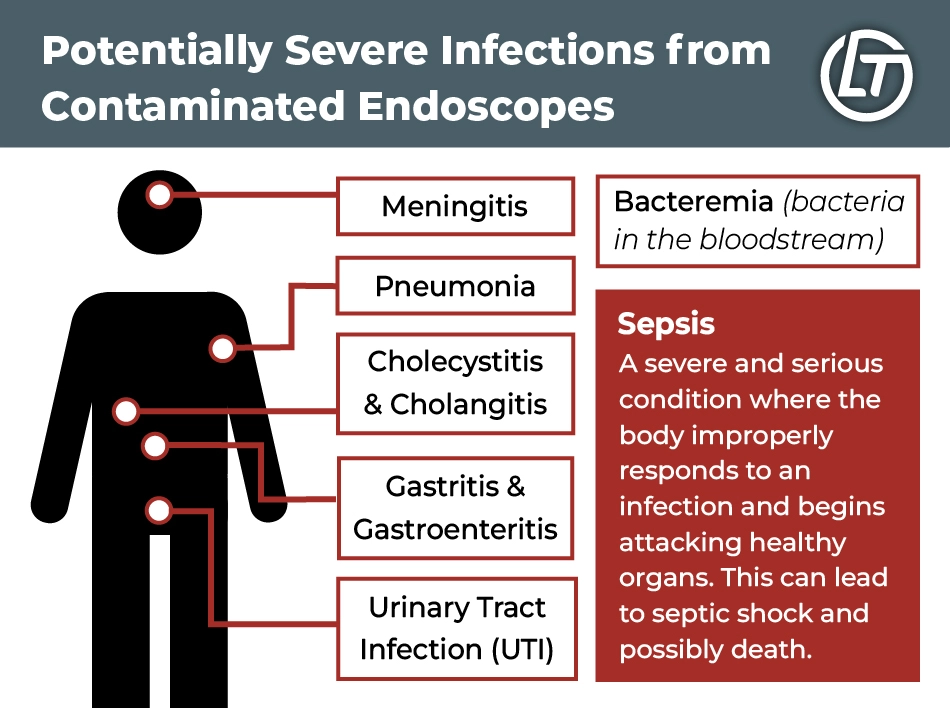
Potentially severe infections after an endoscopy or similar procedure can include:
- Bacteremia
- Cholangitis
- Cholecystitis
- Gastritis
- Gastroenteritis
- Infected abscesses
- Lung tuberculosis
- Meningitis
- Pneumonia
- Sepsis
- Urinary tract infection (UTI)
Signs and Symptoms of Infection After an Endoscopy Procedure
Signs and symptoms of infection after an endoscopy or similar procedure can vary depending on where in the body the infection is located. Typical symptoms may include fever, redness, swelling (for example, of the abdomen), and/or nausea.
Symptoms like chest pain, coughing (including coughing up blood), difficulty breathing, or bloody stool can indicate infection or other serious complications.
Other Possible Risks of Scoping Procedures
In addition to infection risk, several Olympus scope accessories have been recalled due to potential physical injury. This often relates to a risk of the component becoming detached or ejected during the procedure, which can cause tissue damage and internal bleeding. Some scopes also carry a risk of severe burns when improperly combined with other procedures.
The FDA wants to receive reports of injuries and complications people experience after using a medical device. If you have a scope-related injury you want to report, you can or your physician can make a report in MAUDE (i.e., the Manufacturer and User Facility Device Experience (MAUDE) Database).
Studies Examining Endoscopes and Infection
Although the potential for infection after endoscopic procedures has been known for a long time, the body of scientific studies of infection specifically is relatively small. However, in recent years, researchers have begun to study this phenomenon more closely.
Important Study: Complications of Endoscopic Retrograde Cholangiopancreatography: How to Avoid and Manage Them
This review of several existing studies examines potential complications of ERCP, including pancreatitis, hemorrhage, and infection. It emphasized that infection is one of the most severe potential side effects, with a relatively high mortality rate. Infection is often preventable with proper cleaning and sterilization of scopes and accessories that will be reused.
| Overview: Complications of Endoscopic Retrograde Cholangiopancreatography: How to Avoid and Manage Them | |
| Description of Study: | Review of ERCP complications and ways to improve patient outcomes |
| Published In: | Gastroenterol Hepatol (N Y) |
| Study Authors | Nicholas M. Szary, Firas H. Al-Kawas |
| # of Participants | Multiple studies:2,347 patients from 17 institutions3,178 patients who underwent ERCP (Chinese study)4,561 patients (British study)16,855 patients who underwent ERCP from 1977-2006 |
| Findings | Across the studies, rates of post-ERCP complications ranged from 5% - 9.8%Complications included pancreatitis, hemorrhage, and infectionPost-procedure infection, often due to improper disinfection of scopes and accessories, was found in 1.4% of patientsThe mortality rate of infections was 7.85% |
What Damages Can People Sue Olympus For?
People who experience severe infections after a procedure with an Olympus scope may be able to pursue multiple types of damages through a lawsuit.
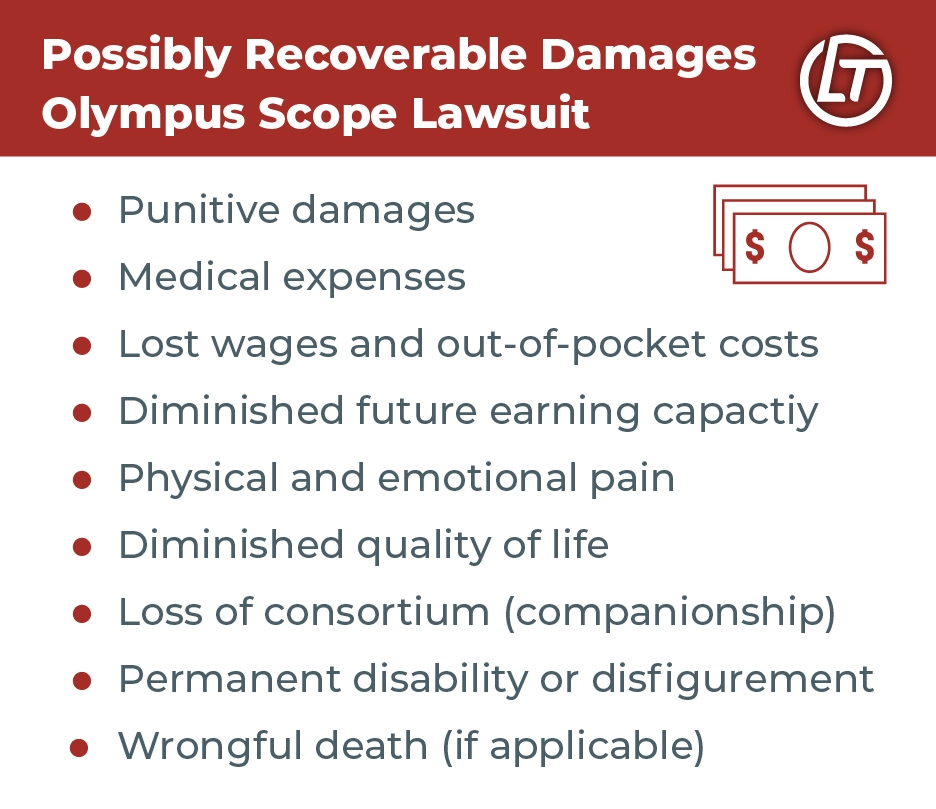
You may receive compensation for various monetary expenses stemming from an infection or injury, including:
- Medical expenses
- Past Medical Bills: Hospital stays, diagnostic tests, emergency room visits, medication, and surgeries are all immediate potential costs when a patient has a serious post-procedure complication.
- Future Medical Expenses: Injuries from an Olympus scope can lead to chronic conditions that require ongoing treatment and/or medication. They may require additional surgeries in the future.
- Lost wages or income
- Past Lost Wages: You may have been out of work for longer than expected due to complications from a procedure.
- Future Lost Earning Capacity: Long-term complications from injury and/or infection can reduce your ability to work in the future.
- Out-of-pocket expenses
- You may also be reimbursed for expenses like travel to visit specialists or modifications to your home.
- Litigation costs
- If you win your case, the judge may order the defendant to pay your legal fees, filing fees, and other expenses related to the suit.
You may also be awarded damages based on the impact the injury had on your life and wellbeing, including:
- Physical and mental pain and suffering
- Physical pain: Injuries and infections can be painful and can lead to uncomfortable or painful chronic conditions. Their treatment, such as surgery, may be painful as well.
- Emotional Distress: Injuries and severe infection often pose serious mental health challenges, including depression, anxiety, and other conditions.
- A diminished quality of life
- You may find your quality of life has eroded due to an inability to do activities you enjoy, perform normal tasks, or a related reason
- Permanent disability or disfigurement
- Permanent Disability: Infection and injuries from Olympus scopes can lead to chronic ailments and other long-term damage.
- Disfigurement: Treatment can cause scarring or other physical disfigurement.
- Loss of Consortium
- Your injury may have hurt your relationship with your spouse or partner
- Wrongful Death (if applicable):
- If you are filing suit on behalf of a deceased family member, you may receive compensation for funeral expenses, grief and emotional distress, and other related harm
Finally, if a judge or jury finds that the defendant was sufficiently reckless, negligent, or irresponsible, they may also award you punitive damages.
Who Qualifies to File an Olympus Lawsuit?
In order to file a lawsuit related to Olympus scopes, each person has to meet certain eligibility requirements. Our legal partners are focusing on the specific injuries listed below in individuals who had a procedure using an Olympus scope:
- Sepsis/infection
- Human Immunodeficiency Virus (HIV) (rare)
As lawsuits develop and more injuries come to light, these requirements may change. When in doubt, an attorney can help you understand your potential legal options.
What Proof Do You Need to File an Olympus Scope Infection Lawsuit?
Your lawyer can advise you on what proof you need to present in your Olympus scopes lawsuit. You may need to gather evidence such as medical and financial records, treatment records, testimony from friends and family, a timeline of events, and other documentation to build your case. To make your case, you will need to establish:
- You had a procedure utilizing an Olympus scope, such as ERCP or colonoscopy.
- Your treatment required hospitalization and intravenous antibiotics.
- You experienced an infection or serious injury allegedly caused by the scope. (You must show that the infection happened after the procedure, and that it was unlikely to be caused by another source.)
- The immediate financial cost of the infection, including medical expenses, lost wages, and other out-of-pocket costs related to the injury.
- The long-term cost of the infection, including ongoing medical needs, potential lost earnings, and other financial impacts.
- The impact the injury had on your life, including long-term physical and mental health consequences, relationships with a spouse or partner, and/or lifestyle changes related to the infection.
8 Steps to File an Olympus Scope Lawsuit
To file a lawsuit, you need an attorney who understands the legal system and the nuances of medical device lawsuits and product liability. A qualified attorney will guide you through the legal process and work with you to build the strongest case possible.
In general, these are the steps for filing an Olympus scope lawsuit:
- Talk to a lawyer about your injuries to find out if you have a case.
- If they believe you can prove your injuries were caused by an Olympus scope, they will help you gather your medical records, doctor’s notes, and other evidence to support your case.
- Once you have collected the documentation you need, they’ll use it to build your case and argue the legal basis for a lawsuit, which might include a defect in the Olympus scope used during your procedure, negligence on Olympus’ part, or a failure to warn the public about the device’s dangers.
- Next, your attorney will file the claim in court. (This must happen within your state’s statute of limitations.)
- Both your attorney and Olympus’ attorneys will collect additional evidence as part of pretrial discovery. This could include depositions of you and your family, or interviews with medical experts. Your attorney will help you prepare if you are interviewed as part of pretrial discovery.
- At any point in the process, your attorney may try to negotiate a settlement. If you and Olympus can agree on settlement terms, the case will not need to go to trial (because you will drop your lawsuit).
- If there is no settlement beforehand, your attorney will argue your case in court. Depending on where you file, this could be a jury trial.
- If your case is successful, you may be awarded compensation for medical expenses, pain and suffering, and other consequences of your injuries.
What to Expect When Filing an Olympus scope Lawsuit
Generally, you can expect a lawsuit to be a lengthy process, with periods of activity such as gathering evidence and filing, followed by a wait for court dates, depositions, and other events. Most attorneys operate on a contingency basis for this type of lawsuit and are compensated based on the award or settlement. This means you will not owe any upfront fees and will only pay your attorney if you receive compensation.
Olympus scope lawsuits are in their early stages, so they may move forward slowly at first. However, it is important to file as soon as possible in order to stay within the statute of limitations for product liability suits. As more cases are filed and go to trial, the process will speed up.
What is the Deadline for Filing an Olympus Scope Lawsuit?
The statute of limitations is the period of time after your injury during which you can file a lawsuit. Once the statute of limitations passes, you will not be able to sue, even if your injuries were severe.
States set their own statutes of limitations. Most are between 1 and 3 years, although some states filing statutes may be as long as 6. There are some variations if, for example, a minor or wrongful death was involved.
If you only recently discovered your infection might have been linked to a contaminated scope, you may still have time to file a lawsuit. An attorney can advise you on filing deadlines.
Important considerations when filing include:
- Usually, the statute of limitations begins when you experience an infection alleged to have been caused by a scope.
- Wrongful death claims may have a longer statute of limitations, which typically begins at the date of death.
- If you think you might have a case, you should talk to a lawyer as soon as possible. If you wait, you run the risk of missing filing deadlines and losing your ability to sue.
- Gather documents, like medical records of your procedure and injuries, as soon as you can. These are necessary for building your case, and can take time to obtain.
- Look for an attorney experienced with product liability suits against medical device manufacturers.
Olympus Scope Settlements and Awards
It is too early to say with any confidence what settlements and awards might be for Olympus scope lawsuits. Compensation from product liability lawsuits depends on a variety of factors, including individual circumstances, precedents set in early rulings and settlements, and if the defendant is deemed to have been reckless or negligent.
Factors Affecting the Value of an Olympus Scope Infection Lawsuit
The value of a lawsuit will depend on the specific answers to questions like:
- How severe was the injury? Did a hard-to-treat superbug infection or malfunctioning scope accessory cause you permanent physical damage or long-term health issues? How painful was it? How expensive was it to treat?
- How did the injury affect your life? Did you miss work or lose your job? Do long-term effects from the injury limit your ability to work? Did it harm your family relationships? Did you have to make lifestyle changes, or experience long-term mental health effects that make it harder to enjoy your life?
- Were Olympus’ actions reckless or negligent? Do the courts believe Olympus was reckless or negligent in designing and marketing its scopes? Did they hide critical safety information from the public? Are their recommended safety protocols sufficient to prevent infection and other injuries?
Sometimes, the more severe the injury and impact, the higher the potential compensation, especially if the courts decide that Olympus acted recklessly in some way. If Olympus was found to have acted with gross negligence or reckless conduct, it could be ordered to pay punitive damages to some plaintiffs.
Learn More About Olympus Scope Infection Lawsuits From Our Legal Team
If you think you were harmed by an Olympus scope, our legal partners are standing by to hear about your experience. Our affiliated lawyers have decades of experience in product liability and medical device lawsuits, including colonoscopy infection lawsuits. They are here to answer questions and help you through the process as you consider filing a lawsuit related to an infection after a scoping procedure.
Related Content
Contact Us Today
"*" indicates required fields