Get a FREE Case Evaluation
"*" indicates required fields

Quick Facts: Gabapentin
- Brand Names: Neurontin, Gralise, Horizant, and Relgaabi
- Drug approved to treat: Some types of seizure disorders and postherpetic neuralgia
- Common off-label uses: Pain, sciatica pain, complex pain, anxiety, alcohol or substance use disorder, sleep, depression, mood stabilizer, diabetic neuropathy, and hot flashes
- Active Ingredient: Gabapentin
- Manufacturers With Lawsuits: Pfizer, Teva, Amneal, Aurobindo, Zydus, and Sandoz
- Potential Severe Complications: Memory loss, dementia, mild cognitive impairment
- Lawsuit Type: Individual
- Lawsuit Status: Early stages
Gabapentin Dementia Lawsuit – 2026 Update
People are filing lawsuits because they believe taking gabapentin as prescribed by their doctors may have caused them to develop early-onset dementia or cognitive decline. Observational studies have suggested a possible association between taking gabapentin for off-label purposes and an increased risk of being diagnosed with dementia or cognitive impairment. Some patients believe gabapentin manufacturers should have warned consumers and doctors about this potential increased risk. Patients and their loved ones are filing lawsuits against gabapentin manufacturers to request compensation for their losses.
Gabapentin Lawsuit Timeline & News – October 2026
July 10, 2025: Researchers Suggest Taking Gabapentin for Chronic Lower Back Pain May Increase Dementia Risk for Some Patients Under 64
A new study, Risk of dementia following gabapentin prescription in chronic low back pain patients, investigated the potential risk of developing dementia or cognitive impairment after taking gabapentin. Using data from 26,416 patients with chronic back pain, the researchers found that patients who were prescribed gabapentin for chronic lower back pain had an increased risk of being diagnosed with dementia or cognitive impairment. Patients had a 40% higher risk of dementia and a 65% higher risk of cognitive impairment if they were prescribed gabapentin 12 or more times compared to those prescribed gabapentin 3 to 11 times. Gabapentin patients who were between 18 and 64 were 2.1 times more likely to be diagnosed with dementia and 2.5 times more likely to be diagnosed with cognitive impairment than those who were not prescribed gabapentin.
December 2023: Researchers Discover that Drug Companies Underreported Harms in At Least Six Clinical Trials of Gabapentin
A team of researchers discovered that “important harms” were underreported or not reported at all in at least six clinical trials of gabapentin. According to the researchers, based on the new data, nervous system harms may be more common than previously thought when taking gabapentin. The researchers explained that more clinical trial data became available because of lawsuits against Pfizer and other gabapentin manufacturers.
June 2, 2014: Pfizer Agrees to Pay $325 Million Settlement Over How It Marketed Neurontin (Gabapentin)
Pfizer has agreed to pay a $325 million settlement to resolve allegations that it illegally marketed Neurontin (a gabapentin product) for non-FDA-approved uses. Insurance companies and third-party payers brought the lawsuits. Doctors can prescribe medications for uses not listed on the FDA-approved label as long as the use is medically justified. However, drug companies can only market drugs for FDA-approved purposes.
May 2004: Department of Justice Secures $430 Million Settlement Against Pfizer Subsidiary for Unlawful Gabapentin Marketing
The U.S. Department of Justice announced that Pfizer and its subsidiary would pay a $430 million settlement to resolve claims that it unlawfully advertised Neurontin (gabapentin) for off-label or scientifically unsupported purposes. For example, according to the DOJ’s announcement, Pfizer’s subsidiary allegedly said doctors should prescribe gabapentin as a patient’s only drug treatment for epilepsy. However, the DOJ says the FDA specifically said gabapentin should not be used as a patient’s only drug treatment for epilepsy.
On this page:
Gabapentin Lawsuit Timeline & News – October 2026
What is the Gabapentin Dementia Lawsuit About?
Why Are People Filing Gabapentin Lawsuits?
Whom Are People Filing Gabapentin Lawsuits Against?
Allegations Against Gabapentin Manufacturers
What Stage Are Gabapentin Lawsuits In?
What Is Gabapentin and How Does It Work?
Possible Injuries Caused By Gabapentin
Is Early-Onset Dementia Listed on Gabapentin’s Drug Label?
Signs and Symptoms of Dementia and Cognitive Decline
Studies Examining Gabapentin Use and Cognitive Decline/Dementia
Are There Any Gabapentin Recalls or FDA Safety Warnings?
What Damages Can People Sue Gabapentin Manufacturers For?
Who Qualifies to File a Gabapentin Lawsuit?
What Proof Do You Need to File a Gabapentin Lawsuit?
How to File a Gabapentin Lawsuit
What is the Deadline for Filing a Gabapentin Lawsuit?
Gabapentin Settlements and Awards
What is the Gabapentin Dementia Lawsuit About?
People who have filed gabapentin lawsuits are accusing pharmaceutical companies of not properly warning the public about the potential cognitive risks of taking gabapentin. Studies have suggested that some people who take gabapentin may have a higher chance of developing memory loss, dementia, and mild cognitive impairment. Some researchers believe that companies like Pfizer may have been aware of the potential neurological impacts of gabapentin but failed to disclose this information.
| Gabapentin Lawsuit Information | |
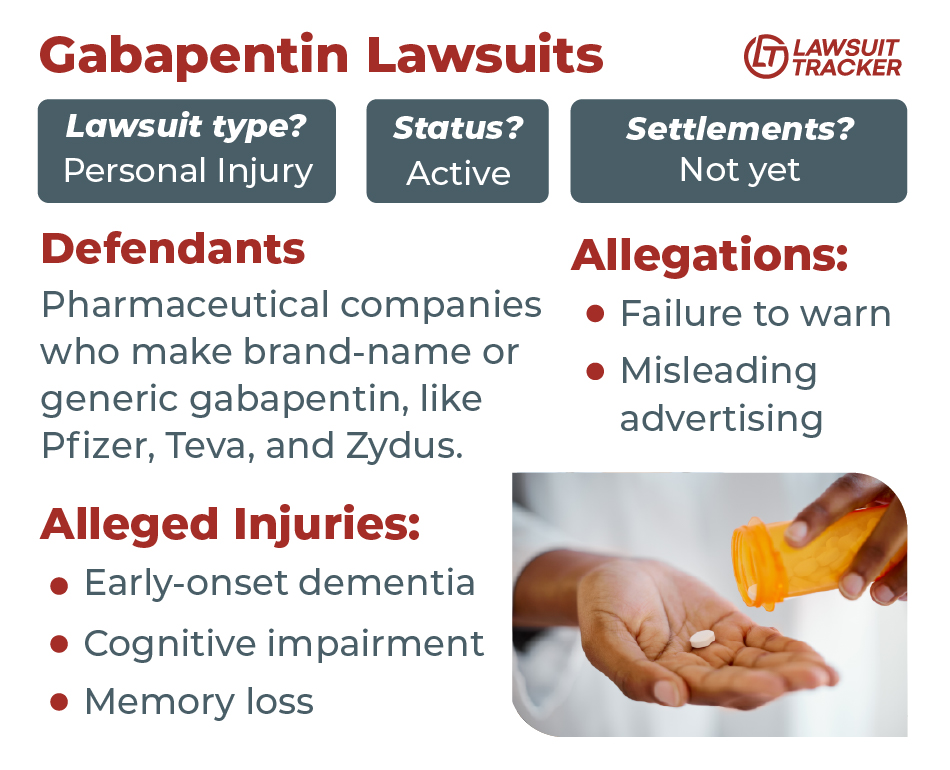
| Lawsuit Summary: | Patients who took gabapentin are suing because they were diagnosed with early-onset dementia or mild cognitive impairment |
| Main Injuries: | Dementia, memory loss, mild cognitive impairment |
| Possible defendants: | Drug companies that made brand-name or generic gabapentin (e.g., Pfizer, Aurobindo, Teva, and Zydus) |
| Mass tort or class action? | Individual and group claims |
| Where are lawsuits being filed? | State and federal courts |
| Have There Been Settlements? | No widely reported personal injury settlements yet |
| Active Lawsuit? | Yes |
Why Are People Filing Gabapentin Lawsuits?
People are filing gabapentin lawsuits because they allege gabapentin causes early-onset cognitive decline or dementia that they were not warned about. By filing a lawsuit, people hope to recover compensation for their financial and personal losses related to their cognitive decline.
Research has suggested that some people who take gabapentin may have a higher risk of developing dementia and cognitive decline. Researchers have also suggested that the drug companies underreported the effects that gabapentin had on patients’ nervous systems during clinical trials. Patients who are suing believe they should have been told that gabapentin may lead to dementia, cognitive impairment, or memory loss.
Whom Are People Filing Gabapentin Lawsuits Against?
People are filing lawsuits against the drug companies that manufactured, designed, and sold brand-name and generic versions of gabapentin. The following companies produce drugs whose active ingredient is gabapentin, so these companies may become defendants in gabapentin lawsuits:
- Amneal
- Aurobindo
- Parke Davis
- Pfizer
- Teva
- Viatris
- Warner Lambert
- Zydus
Information for some of the defendants is listed below.
Defendant 1: Pfizer
Pfizer is a pharmaceutical company headquartered in New York City and founded in 1849. Pfizer acquired Warner-Lambert in 2000. Pfizer owned the patent for Neurontin (the brand-name version of gabapentin). However, the patent expired in 2004. In 2020, Viatris was formed as a standalone company that was spun off from Upjohn (Pfizer’s subsidiary) and Mylan. Viatris now manufactures gabapentin. Pfizer has paid over $1 billion in settlements over accusations about how it advertised gabapentin.
Defendant 2: Warner-Lambert (Parke Davis)
Parke Davis is a subsidiary of Warner-Lambert and developed gabapentin (Neurontin) in the 1970s. Warner-Lambert received a U.S. patent for gabapentin in 1977. In December 1993, the FDA approved gabapentin (Neurontin) to help treat some types of seizures in patients over 12.
In 1996, a former Parke-Davis employee filed a lawsuit, accusing Parke-Davis and Warner-Lambert of marketing gabapentin (Neurontin) for off-label purposes (i.e., purposes other than what the FDA approved the medication for). In 2004, generic versions of gabapentin became available.
Other Legal Actions Taken Against Pfizer and Neurontin
Pfizer, Warner-Lambert, and Parke-Davis were accused of marketing gabapentin products (like Neurontin) for off-label purposes. Doctors can prescribe drugs for off-label purposes. However, according to federal law, it is illegal for drug companies to market medications for off-label purposes. These lawsuits resulted in Pfizer and its subsidiaries paying over $1 billion in combined settlements. One of those lawsuits settled for $325 million, and another settled for $430 million.
Allegations Against Gabapentin Manufacturers
Some of the allegations against gabapentin manufacturers are that the companies failed to warn the public about the cognitive risks of taking gabapentin. Lawsuits may also accuse the companies of being misleading in their advertisements about the possible risks and benefits of gabapentin. People who file lawsuits may also allege that the companies should have designed gabapentin to be safer.
Gabapentin and Off-Label Marketing
Gabapentin manufacturers have paid multiple settlements to resolve claims that they illegally marketed gabapentin for uses other than what the FDA had approved the medication for. Doctors can prescribe medications for non-FDA-approved purposes. However, there are rules regarding how companies advertise their drugs for non-FDA-approved purposes. According to several lawsuits and government-led investigations, Pfizer and its subsidiaries allegedly advertised Gabapentin for non-FDA-approved purposes.
What Stage Are Gabapentin Lawsuits In?
Gabapentin lawsuits for dementia, memory loss, and cognitive impairment may be in their early stages. Currently, there are no widely reported federal lawsuits. However, as more people file gabapentin lawsuits, they could be consolidated into a multidistrict litigation or state-level centralized action. Even if centralization does not occur, individual plaintiffs may continue to pursue lawsuits.
What Is Gabapentin and How Does It Work?
Gabapentin is an antiseizure medication that scientists believe slows down some types of brain activity. Scientists are not sure how gabapentin works.
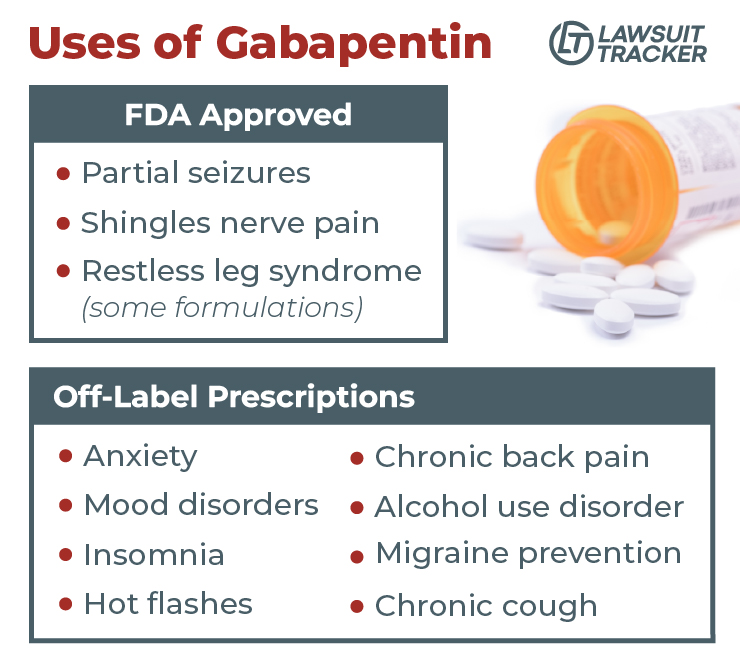
Gabapentin was first produced as Neurontin to treat some types of seizure disorders. Later, the FDA approved extended-release forms of gabapentin to treat restless leg syndrome and postherpetic neuralgia (nerve pain after shingles). Gabapentin is often prescribed for off-label purposes, including:
- Alcohol use disorder
- Anxiety
- Chronic pain
- Depression
- Diabetic neuropathy
- Hot flashes
- Mood imbalances
- Sleep disorders
- Substance use disorder
Gabapentin is also available in generic, liquid, and extended-release forms.
Recognized Side Effects of Gabapentin
Side effects that are on gabapentin’s warning label include:
- Difficulty staying awake (somnolence)
- Sedation
- Dizziness
- Seizures
- Central nervous system depression
- Suicidal behaviors (even if the person does not have a history of suicidal ideation or attempts)
The UK Electronic Medicines Compendium notes that amnesia, confusion, abnormal thinking, and other “undesirable effects” are “common” when taking gabapentin. More side effects may be added to gabapentin’s U.S.-based label in the future.
Possible Injuries Caused By Gabapentin
Injuries that some people believe might be associated with or worsened by gabapentin use include dementia, memory loss, and premature cognitive decline. However, scientists are still researching to understand how gabapentin impacts the brain.
Early-Onset Dementia and Memory Loss
Several studies have suggested that taking gabapentin may be associated with an increased rate of dementia, which may include memory loss. It is not known if the dementia that may be associated with gabapentin is permanent or will improve over time. People who take gabapentin may have trouble concentrating, recalling information, thinking clearly, or performing other cognitive tasks.
Sometimes, these effects may be related to taking gabapentin or be due to withdrawal symptoms from recently lowering the dose or stopping the medication. In those situations, the dementia-like symptoms they might be experiencing could improve with time and, where appropriate, a dose adjustment. However, current or past gabapentin patients who have been formally diagnosed with clinical dementia may not be able to reverse the condition with a medication change.
Outcomes for this injury
Patients who are experiencing new or worsening memory problems or mood changes can seek treatment from their doctors. Their doctor may recommend tapering the gabapentin dose down or titrating it up, depending on the symptoms, when they started, and when those got worse. Patients should never change their dosage or stop taking gabapentin without consulting their doctor.
Premature Cognitive Decline
Some observational studies have suggested that some people who take gabapentin for a long time have had a higher chance of being diagnosed with premature cognitive decline. However, researchers are still learning about the potential association between gabapentin and premature cognitive decline.
Outcomes for this injury
Gabapentin patients who are experiencing premature cognitive decline or memory problems should talk to their doctor for evaluation and treatment. Their doctor may recommend adjusting the patient’s dose, how often they take gabapentin, or other measures. Patients’ symptoms may improve after these adjustments. However, this is not a guarantee.
The FDA wants to receive reports of injuries and side effects people experience after taking a pharmaceutical drug. The FDA Adverse Event Reporting System (FAERS) informs future decisions about drugs. If you have a gabapentin side effect you want to report, you can learn more about submitting a Medwatch Voluntary Report here.
Is Early-Onset Dementia Listed on Gabapentin’s Drug Label?
Early-onset dementia is not listed on gabapentin’s drug label. However, gabapentin’s label does reference adverse events involving the nervous system that some patients reported during clinical trials. For example, amnesia (memory loss), somnolence (difficulty staying awake), changes in thinking, and ataxia (uncoordinated movements) were reported in some gabapentin patients during clinical trials. Of note, a research review discovered that Pfizer and its predecessors underreported the number of adverse events (including neurological changes) that patients experienced in at least six clinical trials of gabapentin.
Signs and Symptoms of Dementia and Cognitive Decline
The possible signs of dementia and cognitive decline include:
- Abnormal thoughts or thinking patterns
- Concerning mood changes
- Feeling excessively tired
- Getting lost or disoriented
- Memory changes
- Memory loss
- Problems completing daily tasks
- Trouble thinking clearly
Scientists are still researching to understand the possible connection between gabapentin, dementia, and cognitive decline. It is not yet known if gabapentin directly causes dementia or cognitive decline.
Studies Examining Gabapentin Use and Cognitive Decline/Dementia
Several studies have suggested that patients who took gabapentin had an increased likelihood of being diagnosed with dementia or cognitive decline. These studies used patient databases provided by hospitals and insurance companies. One of those studies noted that gabapentin patients in the database aged 18 to 64 were 2.1 to 2.5 times more likely to be diagnosed with early dementia or cognitive impairment, respectively, than others.
Important Study: The association between Gabapentin or Pregabalin use and the risk of dementia: an analysis of the National Health Insurance Research Database in Taiwan
The association between Gabapentin or Pregabalin use and the risk of dementia: an analysis of the National Health Insurance Research Database in Taiwan used insurance databases in Taiwan to explore the potential association between gabapentin and pregabalin and the likelihood of being diagnosed with dementia. The researchers used patient data for 206,802 patients, 34,467 of whom had taken gabapentin or pregabalin.
According to the researchers, their findings showed that gabapentin and pregabalin patients under 50 in the database were over 3 times more likely to be diagnosed with dementia than patients in that age group who were not prescribed gabapentin or pregabalin. Patients of all ages in the researchers’ database were 45% more likely to be diagnosed with dementia if they had taken gabapentin or pregabalin.
| Overview: The association between Gabapentin or Pregabalin use and the risk of dementia: an analysis of the National Health Insurance Research Database in Taiwan | |
| Description of Study: | Used a large patient database to estimate the risk of dementia in patients who took gabapentin or pregabalin |
| Published In: | Frontiers in Pharmacology |
| Study Authors | Yu-Hua Huang, Mei-Hung Pan, Hwai-I Yang |
| # of Participants | 206,802 |
| Findings | Patients in the database who were under 50 and had taken gabapentin or pregabalin were over 3 times more likely to be diagnosed with dementia. |
Are There Any Gabapentin Recalls or FDA Safety Warnings?
Recalls and safety warnings have been issued about gabapentin. In 2019, the FDA warned about the risks of taking Gabapentin if patients have respiratory risk factors, like COPD or opioid use. Additionally, some gabapentin lots were recalled in 2025 and 2026 (in the U.K.) because of incorrect expiration dates, packaging issues, quality control issues with the oral solution, and contamination concerns. However, a recall or warning has not been issued that addresses concerns about dementia or cognitive impairment.
What Damages Can People Sue Gabapentin Manufacturers For?
Damages that people may be able to sue gabapentin manufacturers for include:
- Medical costs of diagnosing and treating gabapentin-related dementia, cognitive decline, and memory problems
- Lost wages
- Loss of earning potential
- Pain and suffering
- Prescription costs
- Rehabilitative or occupational therapy costs
- Loss of quality of life
Patients who experience gabapentin-related dementia, cognitive decline, or memory problems may qualify to request compensation related to their losses. An attorney can help gabapentin patients determine what compensation they may be able to request.
Who Qualifies to File a Gabapentin Lawsuit?
In order to file a gabapentin lawsuit, each person has to meet certain eligibility requirements. Our legal partners are focusing on the specific injuries and criteria listed below:
- You were prescribed gabapentin at least 6 times between 2000 and 2025 (includes prescription refills).
- You were prescribed gabapentin for nerve pain, anxiety, depression, insomnia, bipolar disorder, seizures (epilepsy), or other reasons.
- After you took gabapentin, you were diagnosed with early-onset dementia or significant cognitive impairment.
You may still qualify to request compensation even if you do not meet our legal partners’ criteria.
Our legal partners may update the legal criteria as the lawsuit progresses, so the above list may change. Contact our legal partners for legal criteria for filing a gabapentin lawsuit.
What Proof Do You Need to File a Gabapentin Lawsuit?
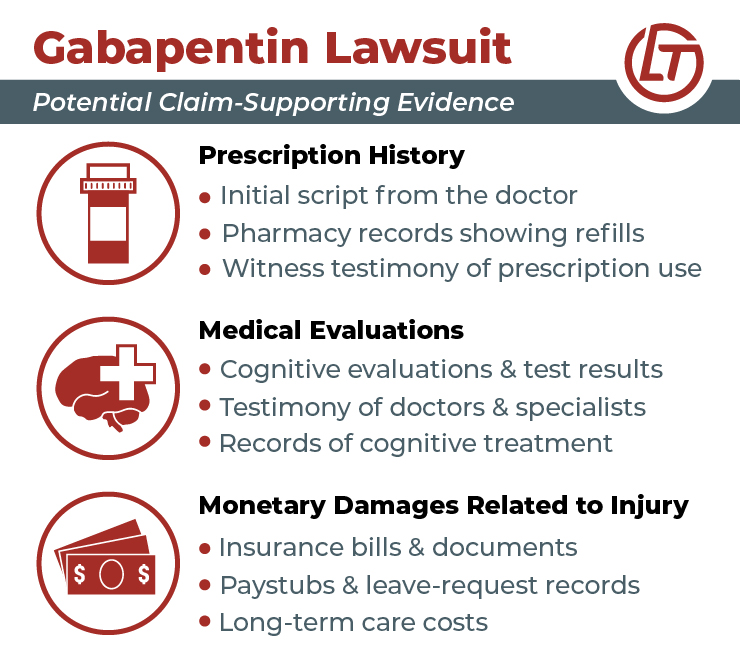
Proof you may need to file a gabapentin lawsuit includes evidence showing that you used gabapentin, experienced complications, and that those complications affected your life. Examples of evidence you or your attorney may use to support your gabapentin lawsuit include:
- Medical records showing when you started gabapentin, why, and what side effects you experienced
- Prescription history (e.g., dose, frequency, and number of prescriptions)
- Records showing your gabapentin-related diagnosis and treatment
- Neurological tests, cognitive function, and brain imaging study results
- Insurance documents and medical bills
- Pay stubs or requests for time off work for gabapentin-related appointments or recovery time
- Pharmacy records
- Testimony from your doctors, coworkers, and loved ones about how taking gabapentin affected you
- Medical expert testimony about how gabapentin can affect people’s cognitive abilities
Your attorney can help you identify what evidence you might need to support your claim. Your attorney can also submit record requests to your doctors, pharmacies, and other sources that may have important evidence for your case. You do not need to have all of the above evidence before you contact an attorney for a consultation or hire them to handle your case.
How to File a Gabapentin Lawsuit
These are the 5 steps for filing a gabapentin lawsuit:
- Step One: Schedule a free case review with a law firm reviewing gabapentin claims. Retain an attorney you trust.
- Step Two: Work with your attorney to help them identify and request records you may need to strengthen your gabapentin lawsuit.
- Step Three: Your attorney uses your records and the law to write a legal complaint to file against the companies that made the gabapentin products you took.
- Step Four: Your attorney tries to negotiate a settlement with the gabapentin manufacturer and other defendants.
- Step Five: If a settlement is not reached, your attorney prepares to take your gabapentin lawsuit to trial.
An attorney can help you understand your rights and handle the legal matters involved in your gabapentin lawsuit. Not all lawsuits will result in settlements or trials. In some cases, lawsuits can be dismissed.
Can Family Members File on Behalf of Someone With Dementia or Cognitive Decline?
States and courts have specific rules about who can file a gabapentin lawsuit on another person’s behalf. An attorney can help family members understand if they can file a gabapentin lawsuit on behalf of a loved one with dementia or cognitive decline.
What is the Deadline for Filing a Gabapentin Lawsuit?
The deadline to file a gabapentin lawsuit depends on the applicable state law, the patient’s unique situation, and other factors. States have laws about when people need to file lawsuits against companies that made or sold gabapentin. These laws also include exceptions that can extend or shorten the default timeline. An attorney can help people calculate the deadline that applies to their gabapentin case and understand what they need to do to meet the deadline.
Gabapentin Settlements and Awards
Gabapentin lawsuits are in their early stages, so there have not been any public settlements or verdicts for individual personal injury lawsuits. Gabapentin settlements may be based on an individual patient’s losses, including the impact of cognitive decline on their quality of life and the cost of diagnosing and treating their condition.
Factors Affecting the Possible Value of a Gabapentin Lawsuit
Factors that may affect the value of someone’s gabapentin lawsuit include:
- The applicable state law
- Whether the person filed their gabapentin lawsuit on time
- The strength of the evidence supporting their gabapentin lawsuit
- Evidence showing how taking gabapentin affected their work, family, social, and personal life
An attorney can help someone estimate how much their gabapentin case may be worth and their likelihood of potentially receiving compensation if they file a claim.
Learn More About Gabapentin Lawsuits From Our Legal Team
If you or your loved one took gabapentin and were diagnosed with cognitive decline or early dementia, our legal partners may be able to help. Contact our legal partners to learn if you qualify to pursue compensation by filing a lawsuit. Our partners offer free, no-obligation case evaluations.
Get a FREE Case Review
Contact Us TodayFAQs
Some studies have suggested that some patients who took gabapentin had an increased likelihood of being diagnosed with dementia or cognitive impairment. However, scientists are still learning about the connection between gabapentin use and brain changes.
You may qualify to file a lawsuit if you took gabapentin and were diagnosed with dementia or cognitive impairment. An attorney can help you understand the criteria you need to meet to file a claim.
It depends. An attorney can help you estimate what compensation you might be able to receive if you took gabapentin and were diagnosed with dementia.
You can talk to your doctor to understand if taking gabapentin may have led to your dementia or cognitive impairment diagnosis.
It depends. Many attorneys handle gabapentin lawsuits on a contingency basis, meaning you may not pay upfront legal fees.
You can hire an attorney by scheduling a consultation to talk to them about your situation. If you decide to hire them and they accept your case, you would sign a representation agreement with their firm.
One research study suggested that gabapentin’s manufacturers may have underreported the number and type of neurological side effects in clinical trials.
Several studies that examined historical patient data have found a potential association between gabapentin use and developing dementia or cognitive impairment.
Contact Us Today
"*" indicates required fields