Get a FREE Case Evaluation
"*" indicates required fields

Quick Facts: Spinal Cord Stimulator
- Brand Names: Eterna, WaveWriter, Intellis, Vantis, Proclaim, Infinity, Precision, Restore, Inceptiv, Itrel, Synergy, HF10 (Senza), Evoke
- Device Used For: Chronic back and leg pain
- Product type: Medical device
- Manufacturers With Lawsuits: Abbott Laboratories (St. Jude), Boston Scientific, Medtronic, FDA, Saluda, and Nevro
- Potential Severe Complications: Paralysis, numbness, loss of feeling, lead migration, nerve damage, new or worsening pain, and electrocution
- Lawsuit Type: Individual lawsuits with the potential to be consolidated
- Lawsuit Status: Early stages
Spinal Cord Stimulator Side Effects and Complications
Spinal cord stimulator (SCS) side effects and complications are relatively common. Some estimates put SCS complication rates between 31.9% and 43%. The most common complication is lead migration, where the implanted electrodes move away from their targeted position over time, reducing the effectiveness of the device. Less common and potentially more serious complications include hematoma, bleeding, infection, spinal cord injury, and cerebrospinal fluid (CSF) leak. Complications may require revision surgery or device removal (i.e., explantation).
On this page:
Possible Short-Term Complications of Spinal Cord Stimulator Implantation
Possible Long-Term Complications of Spinal Cord Stimulator Implantation
What Are Possible Device Complications With Spinal Cord Stimulators?
What Side Effects Can Occur While a Spinal Cord Stimulator Is On?
How Common Are Spinal Cord Stimulator Complications?
Are the Side Effects of Trial Spinal Cord Stimulators the Same as Permanent Implants?
Does Experiencing Side Effects or Complications Mean the Stimulator Needs to Be Removed?
Which Symptoms After an SCS Implant Need Urgent Medical Attention?
How Are Suspected SCS Complications Evaluated and Treated?
Learn About Legal Options After an SCS Injury
Frequently Asked Questions About SCS Side Effects and Complications
Possible Short-Term Complications of Spinal Cord Stimulator Implantation
Spinal cord stimulator implantation is done through surgery. As with any surgery, there are risks. Patients who recently had an SCS implanted should work with their providers to watch for signs of short-term complications.
Possible short-term complications of having an SCS implanted include:
- Postoperative pain or swelling
- Bleeding (hematomas) or incision separation
- Infections
- Neurological injury
- Cerebrospinal fluid (CSF) leaks
- Early lead migration
Short-term, in this case, refers to complications that arise during surgery or soon after implantation. Short-term does not describe the duration of the consequences. For example, a nerve injury during or shortly after the operation could have long-term effects on the patient’s quality of life. Other complications, like postoperative pain and swelling, are common after an SCS surgery and are usually temporary.
Dural Puncture and Spinal Fluid Leak
Dural punctures are tears in the dura mater, which is the outer membrane surrounding the spinal cord or the brain. A puncture of this membrane may result in a CSF leak. A dural puncture can happen intentionally, such as during a spinal tap, or arise as a complication of surgery, with symptoms usually appearing within 1 to 5 days. The most common symptom is a postdural puncture headache, which can be severe and even debilitating. Ideally, CFLs are detected during the operation, but patients who experience a severe postoperative headache should be assessed urgently.
Bleeding (Hematomas)
Hematomas are closed wounds caused by internal bleeding that typically present shortly after surgery. While minor hematomas may not be dangerous, larger ones can cause pressure to build on surrounding tissues. When the hematoma is near a neural structure, like the spinal cord, it can lead to neurological symptoms like pain or numbness. However, serious neurological injuries related to implantation are uncommon.
Possible Long-Term Complications of Spinal Cord Stimulator Implantation
Spinal cord stimulator implants can also result in late-onset or long-term complications. These complications may show up months or years after implantation and even when the device is otherwise working as intended. Long-term complications may involve the tissue and structures surrounding the device, device malfunctions, or even unwanted side effects from stimulation.
Here are some of the possible long-term complications of having a spinal cord stimulator implanted:
- Infections and wounds
- Spinal cord compression and neurological injury
- Dural puncture and spinal fluid leak
- Skin erosion, implant-material reactions
- Gastrointestinal or autonomic symptoms
The duration of long-term side effects associated with SCSs depends on the type and severity of the complication or associated injury.
Infection and Wound Problems
Infections and wound problems can arise as short- or long-term complications. Long-term wound problems are ones that arise after the initial incisions have healed. A multisite retrospective study from 2017 found that SCS implants have an overall infection rate of 2.45%. The study did not find an independent association between diabetes, tobacco use, or obesity and higher rates of infection.
Likewise, infection rates were similar for different types of SCS electrode leads (i.e., percutaneous leads and paddle leads). In some cases, post-operative antibiotics were found to decrease the rate of infection. Patients experiencing redness of the skin, drainage, fever, or escalating pain need assessment and, in some cases, device removal.
Skin Erosion, Implant-Material Reactions and Uncommon Delayed Problems
Though rare, instances of device extrusions have been reported. These may be caused by mechanical friction, infections, poor placement, or localized inflammation. Factors such as diabetes, rapid weight loss after implantation, tobacco use, and older age may increase the likelihood of an extrusion. Hypersensitivity to device materials has also been observed, presenting with itching, redness, swelling, or rashes, though these cases appear to be rare.
Spinal Cord Compression and Neurological Injury
Spinal cord compression and neurological injuries are rare, but they are potentially serious complications of spinal cord stimulator implantation. Possible causes include bleeding in the epidural space, direct injury during implantation, or the formation of scar tissue around implanted leads. These injuries may occur during surgery or develop after implantation. Symptoms of compression or a neurological injury may include numbness, weakness, loss of sensation, difficulty walking, incontinence, or, in severe cases, paralysis. These symptoms should be taken seriously and require immediate medical care.
Gastrointestinal or Autonomic Symptoms
Side effects possibly resulting from SCS stimulation itself, though uncommon, have also been reported. Side effects from stimulation may arise in autonomic systems, like the gastrointestinal tract, and may manifest as nausea, diarrhea, constipation, or delayed stomach emptying. Although these symptoms can be caused by many different factors, some cases saw symptoms improve or resolve when the SCS was turned off or explanted.
What Are Possible Device Complications With Spinal Cord Stimulators?
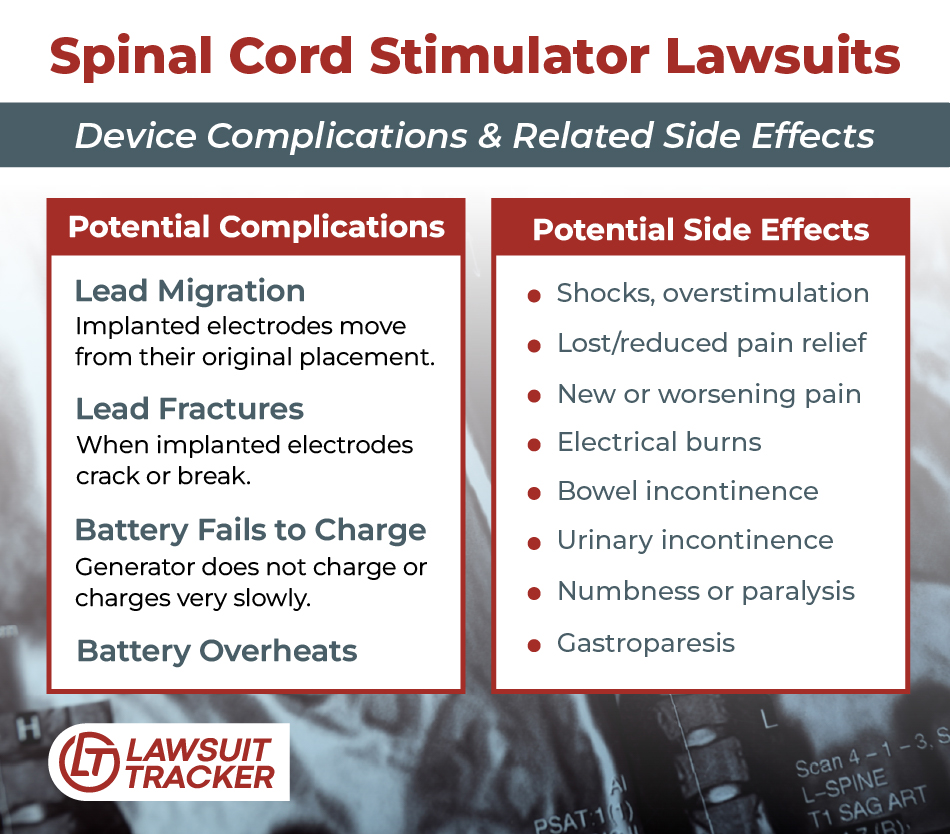
Some SCS complications are hardware- or software-related. Complications in these categories include malfunctions, lead migration, and lead fractures, as well as implantable pulse generator (IPG) related issues. Some of these issues can be fixed by reprogramming the device or through a revision surgery. More severe problems may require a full system removal.
Lead Migration, Lead Breakage and Device Malfunction
Lead migration is the most common SCS complication, affecting just under 10% of patients. Lead migration occurs when the implanted electrodes, or leads, physically move away from their targeted placement. Percutaneous leads are more prone to lead migration than paddle leads. Minor lead migrations can often be mitigated by reprogramming the device, while severe migrations often require a revision surgery. The most common symptom of lead migration is reduced pain relief. Leads may also break, requiring replacement or extraction. Lead issues are typically diagnosed through imaging.
Generator-Pocket Pain, Charging Discomfort, and Burns
Device complications may also involve the IPG, which sits in an internal “pocket” under the skin. Some of these types of complications involve persistent pocket pain, burns, or shocks, often related to charging cycles in which the IPG can heat up. These complications may arise from a device malfunction or improper use of the device.
What Side Effects Can Occur While a Spinal Cord Stimulator Is On?
Patients with implantable SCS devices may experience stimulation-related side effects when the stimulator is turned on. Some of these side effects, such as paresthesia or a reduction in pain coverage, are relatively common and can often be addressed by reprogramming the device. These occurrences may also be a symptom of a complication, such as lead migration. More rarely, patients report shocking sensations or new pain.
Painful Shocks or Stimulation In an Unwanted Area
Painful shock or stimulation in an unwanted area has been linked to posture changes. These shocks or stimulations may be more common as a patient is moving from lying down to sitting or standing. Some research found that constant-current stimulator patients report stimulation discomfort more frequently than constant-voltage stimulator patients. These sensations may also be a symptom of lead migration. Patients experiencing these symptoms should follow device instructions for stopping unpleasant stimulation and contact their provider.
New Pain or Loss of Pain Relief
Loss of pain relief is one of the most common reasons for SCS therapy to fail over the long term. A decrease in treatment efficacy can have numerous causes, ranging from lead migration to habituation. A device check and clinical assessment can help identify the cause. In some patients, stimulation may cause unpleasant sensations or new pain. Changes in stimulation settings, lead position, or other clinical factors may contribute to this pain. Research suggests the type and frequency of stimulation may be relevant. New pain may also be a sign of a more serious, non-stimulation complication and should be promptly discussed with your provider.
How Common Are Spinal Cord Stimulator Complications?
Spinal cord stimulator complications, broadly speaking, are relatively common, with serious complications being less common than minor complications. Rates reported by studies vary by study design, follow-up duration, and reporting practices, with the largest systematic review to date concluding that standardized adverse event definitions and reporting frameworks are needed to produce better comparisons between studies going forward.
| Study Name | Finding | Context |
|---|---|---|
| 2026 systematic review and meta-analysis; 33 studies; 3,445 patients | Pooled patient-level estimate: 24% experienced at least one adverse event and 3% experienced at least one serious adverse event. | Mixed study designs and follow-up. Not a lifetime risk or a prediction for a particular device. Event definitions varied. |
| West et al. (2023); 53 prospective studies/RCTs; 2,932 implanted patients | Pooled lead-migration estimate: 9.97% (95% CI 7.62–12.59%). | Migration was commonly detected after reduced benefit. Asymptomatic migration was not well captured. |
| Hoelzer et al. (2017); multicenter retrospective cohort; 2,737 implant/revision procedures | 67 infections: 2.45% of procedures. | Includes initial implants and revisions; a historical procedure-based estimate, not a current all-device personal risk. |
Note that an event count is not the overall percentage of patients affected. Similarly, the FDA’s medical device reporting system flags potential safety issues, but does not establish causation or incidence rates.
Can Side Effects or Complications Appear Months or Years After Having a Spinal Cord Stimulator Implanted?
Spinal cord stimulator side effects and complications can appear at any point, including months or years later. For example, healing-related complications may appear in the first few weeks after implantation, while lead migration symptoms are more likely to appear over time. However, timing alone cannot identify the cause of the issues a patient is experiencing. Some symptoms can be resolved through device reprogramming, revision surgery, partial system replacements, or device removal, but none of these interventions are guaranteed to address the issues a patient is experiencing.
Are the Side Effects of Trial Spinal Cord Stimulators the Same as Permanent Implants?
While some of the side effects of trial spinal cord stimulators may overlap with those of permanent implants, they are generally considered to be of lower clinical significance as trials typically last a week or less. For example, lead migration is extremely common during trials, as the percutaneous trial leads are not anchored in internal tissue and connect to an external IPG, potentially resulting in false negative trial results. However, IPG-related complications, other than hardware failure, are not really an issue since the battery pack is not implanted. Similarly, some infections are limited to the skin and more easily treated. Many trial-related complications end with the removal of the trial device. However, serious complications and infections can still occur with trial stimulators.
Does Experiencing Side Effects or Complications Mean the Stimulator Needs to Be Removed?
Experiencing side effects or complications does not necessarily mean the SCS needs to be removed. A 2025 systematic review of data covering 13,026 patients who underwent SCS implantation, 1,882 of whom had their devices removed, found the most common reasons for explantation were:
- Inadequate pain relief (38% of cases)
- Lead failure (15% of cases)
- Infection (14% of cases)
These issues may, in some cases, be addressed through more conservative treatments like device reprogramming, lead replacement, or medication. Whether they are effective may depend on the severity or complexity of the issue. Patients should work with their medical providers to explore and evaluate their options.
Which Symptoms After an SCS Implant Need Urgent Medical Attention?
Rapidly worsening neurological symptoms, burns, or signs of serious infection require urgent medical attention after receiving an SCS implant. Symptoms that may require quick medical evaluation include:
| Symptoms | Recommended action to explain |
|---|---|
| New weakness, trouble walking, sudden loss of feeling, or new loss of bladder/bowel control or inability to urinate | Seek an emergency medical assessment now. Do not wait for reprogramming, a routine appointment or a legal review. |
| Fever, spreading redness, increasing wound pain, drainage or an opening wound | Contact the implanting team urgently. Severe illness, rapidly worsening symptoms or accompanying neurological changes warrant emergency care. |
| A severe or persistent headache, especially worse upright and better lying down | Seek prompt medical assessment for a possible spinal fluid leak. Severe symptoms warrant emergency evaluation. |
| New painful shocks, persistent pain at the battery pocket, or a marked change in stimulation or pain relief | Contact the treating SCS team promptly. Emergency warning signs take priority over device troubleshooting. |
How Are Suspected SCS Complications Evaluated and Treated?
The process of evaluating and treating SCS complications varies depending on the type and severity of the symptom. For example, lead migration is often detected through imaging, while infection testing and cultures can identify possible causes of an infection. Treatment may involve clinician-directed programming, treatment of infection, revision, or removal depending on the cause.
Patients can assist their medical providers by coming prepared with:
- Device ID
- Implantation and revision dates
- A log of symptoms and when they appeared
- A record of charging or programming changes
- Any other relevant treatments, such as medication
Your own desire to retain the device or cease stimulation therapy may also factor into how your providers approach your case.
Learn About Legal Options After an SCS Injury
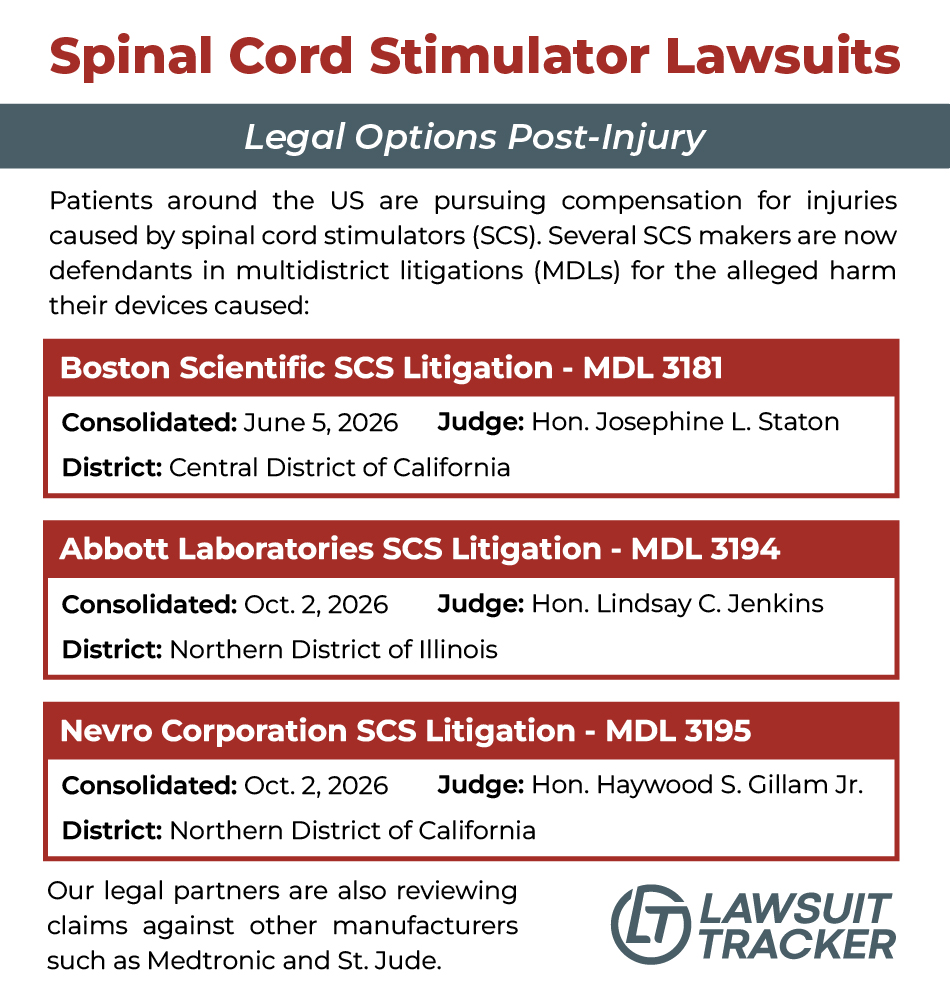
If you have experienced SCS complications, you may be able to pursue compensation for your economic losses and pain and suffering through a spinal cord stimulator lawsuit. Get in touch with our legal partners today for a free case evaluation by submitting a form on this site. Our legal partners have over a decade of experience fighting for people who were harmed by defective medical devices and can help you understand if you have grounds for a case.
Get a FREE Case Review
Contact Us TodayFrequently Asked Questions About SCS Side Effects and Complications
Spinal cord stimulator side effects can include loss of pain relief, new pain, paresthesia, infections, lead migrations, retained hardware, burns, or neurological injury.
Some pain in the first few weeks after an implant is not unusual, but new and worsening pain may be a sign of a complication.
Tingling is a common side effect with spinal cord stimulators, but it should be reported as it may indicate the need for reprogramming or revision.
Experiencing painful shocks from your SCS may be a symptom of hardware failure, lead migration, or inappropriate device settings.
Fever, shaking, chills, night sweats, or localized warmth and swelling could be signs of an infection.
Imaging can detect whether your stimulator leads have moved or are broken.
If the area around your stimulator battery hurts or feels hot, it could be a sign of a surgical pocket infection, allergy, irritation from friction, or a hardware-related issue.
Though very rare, a SCS can cause nerve damage or paralysis, most often due to internal bleeding, surgical trauma, or excessive scar tissue.
Some case reports have reported patients with autonomic symptoms, including GI and urinary tract issues. However, new loss of bladder or bowel control after implantation may indicate a serious neurological complication and requires emergency medical attention.
Yes, a severe headache can be a symptom of a cerebrospinal fluid leak.
Though it’s very rare, patients may experience allergic reactions to specific device materials or skin erosions at the device site.
Yes, complications may occur at any time.
If your symptoms are related to the stimulation therapy itself, turning off your device may cause your side effects to resolve.
No, more conservative options like device reprogramming or revision surgery may resolve some complications.
Yes, you can get a free legal review of your serious SCS complications by submitting a form on this site.
Contact Us Today
"*" indicates required fields